On this page
The Art of Ceylon Traditional Tea Manufacturing
While much of the world has shifted to commercial machine-crushed CTC (Crush, Tear, Curl) tea for cheap tea bags, Sri Lanka remains the world's undisputed capital of Traditional Tea Manufacturing.
Traditional processing is a traditional, artisanal method that gently handles the leaf to preserve its natural shape, cell structure, and essential volatile oils.
Stage 1: Hand Plucking ("Two Leaves and a Bud")
Quality begins in the field. Skilled tea pluckers carefully select only the top two young leaves and tender bud from each branch. Hand plucking ensures zero coarse stems or bitter mature leaves enter the processing line.
Stage 2: Withering (12 to 18 Hours)
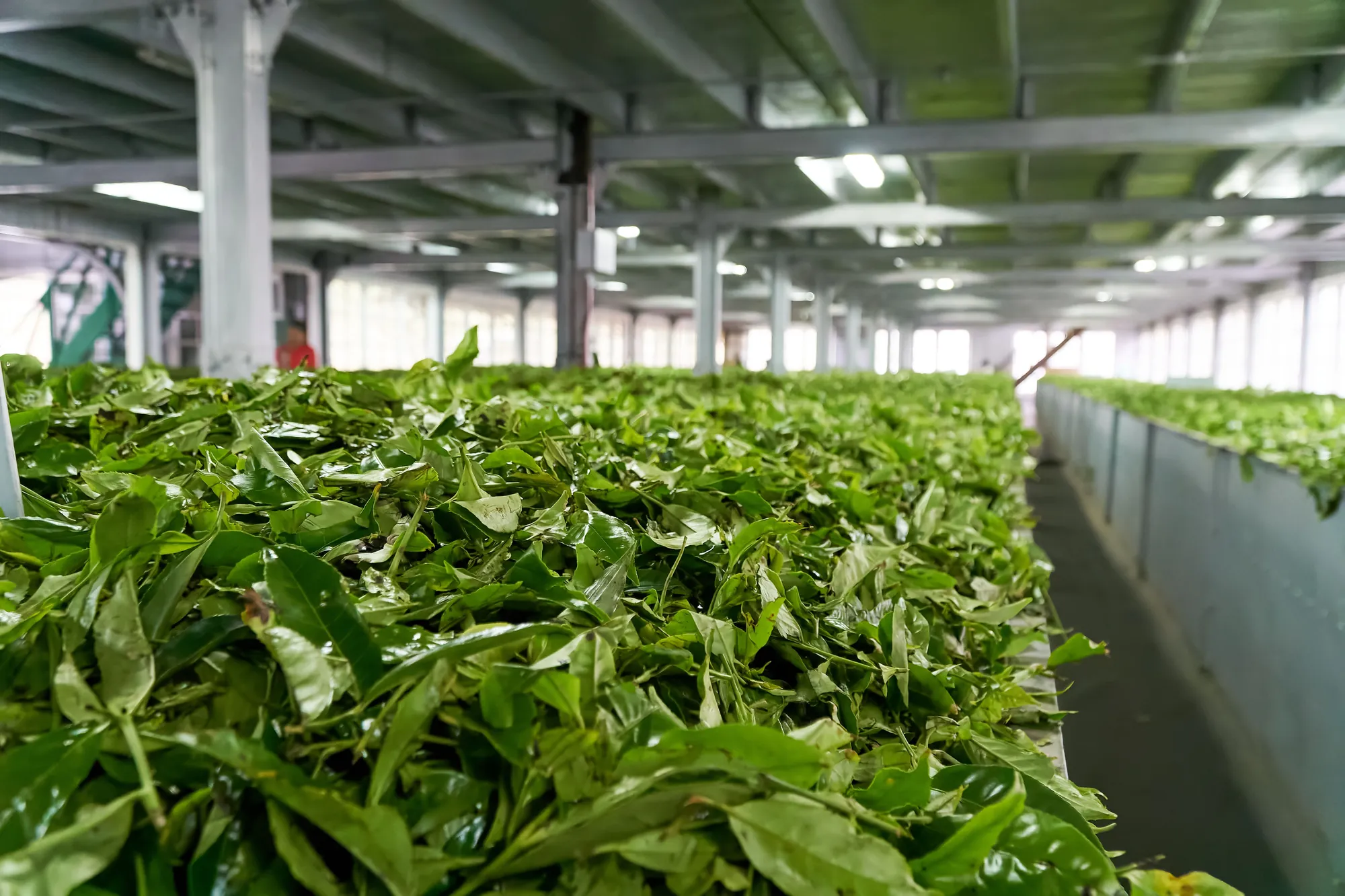
Freshly plucked green leaves are spread across long raised troughs where controlled warm air circulates. Withering reduces the moisture content from ~75% down to ~55%, making the leaves soft and pliable for rolling without shattering.
Stage 3: Traditional Rolling
Pliable leaves are fed into heavy brass traditional rolling machines that twist and rupture the leaf cells. This releases natural enzymes (polyphenol oxidase) and brings essential juices to the surface of the leaf.
Stage 4: Controlled Fermentation (Oxidation)
Rolled leaves are spread on cool ceramic or slate tables in humid firing rooms. Natural oxidation occurs as oxygen reacts with polyphenols, transforming green leaves into rich copper hues and developing signature floral and malty flavor notes.
Stage 5: Firing / Drying & Sorting
The oxidized leaf passes through hot air dryers at 95°C to stop fermentation and reduce moisture below 4%. Finally, rotary mechanical sieves sort the dried black tea into standard leaf grades based on particle size:
- Whole Leaf: OP1, OPA, OP
- Brokens: BOP, FBOP, PEKOE
- Fannings: BOPF, FBOPF Extra Special
- Dust: Dust 1