Market Intelligence
On this page
High Grown vs. Low Grown Ceylon Teas
Elevation is the single most influential factor defining the aroma, liquor density, and color of Ceylon Teas. Sri Lanka's tea plantations are classified into three distinct elevation tiers:
1. High Grown (Above 1,200m / 4,000ft)
- Regions: Nuwara Eliya, Dimbula, Uva, Uda Pussellawa
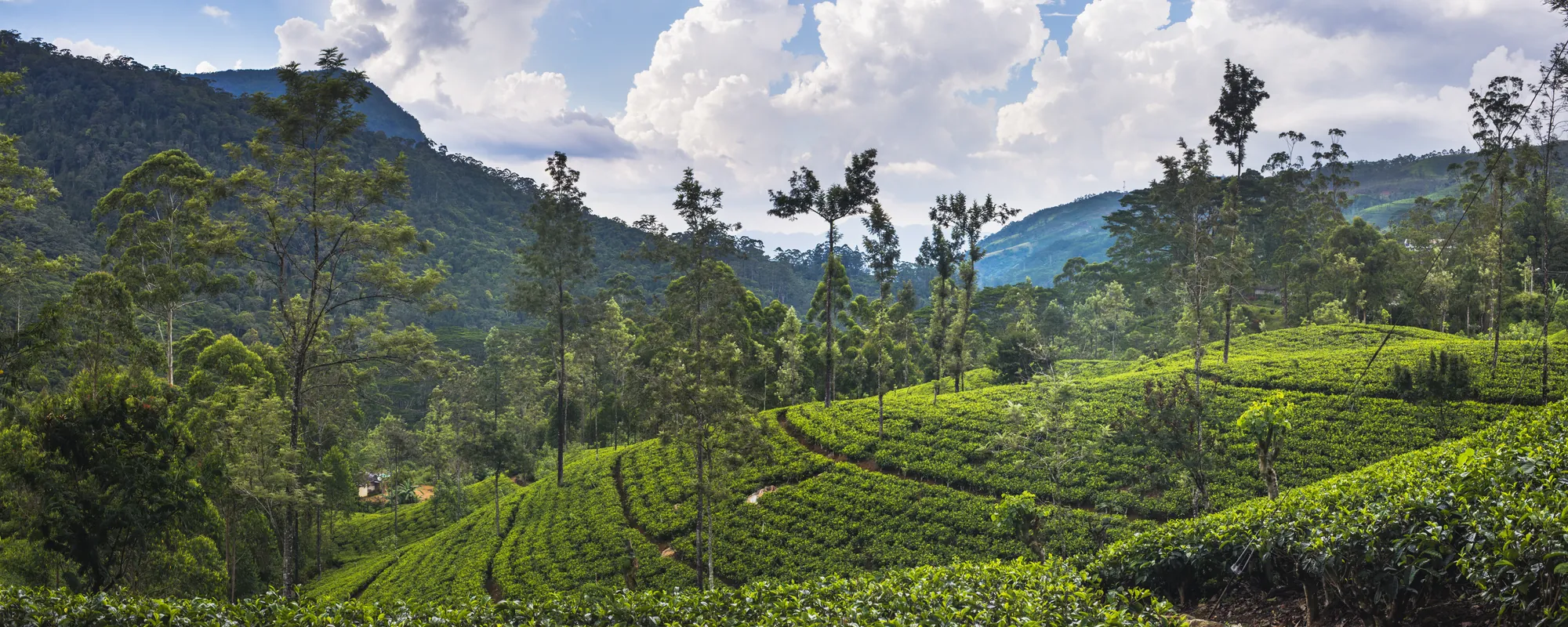
- Climate: Cool alpine air, mist, and drastic day-night temperature changes.
- Character: Light golden coppery liquor, intense floral aroma, refined astringency.
- Ideal Use: Afternoon tea, single-origin sipping, ice tea bases.
2. Medium Grown (600m to 1,200m / 2,000ft - 4,000ft)
- Regions: Kandy, Matale
- Climate: Moderate rainfall and warm valley breezes.
- Character: Rich, well-rounded, citrusy with good body and color.
- Ideal Use: All-day drinking, breakfast blends, fruit-infused flavored teas.
3. Low Grown (Sea Level to 600m / 2,000ft)
- Regions: Ruhuna, Sabaragamuwa
- Climate: Hot, humid, tropical soil rich in organic humus.
- Character: Intensely dark mahogany liquor, heavy body, sweet malty and caramel flavor.
- Ideal Use: Traditional milk tea, chai spices, Middle Eastern market blends.