
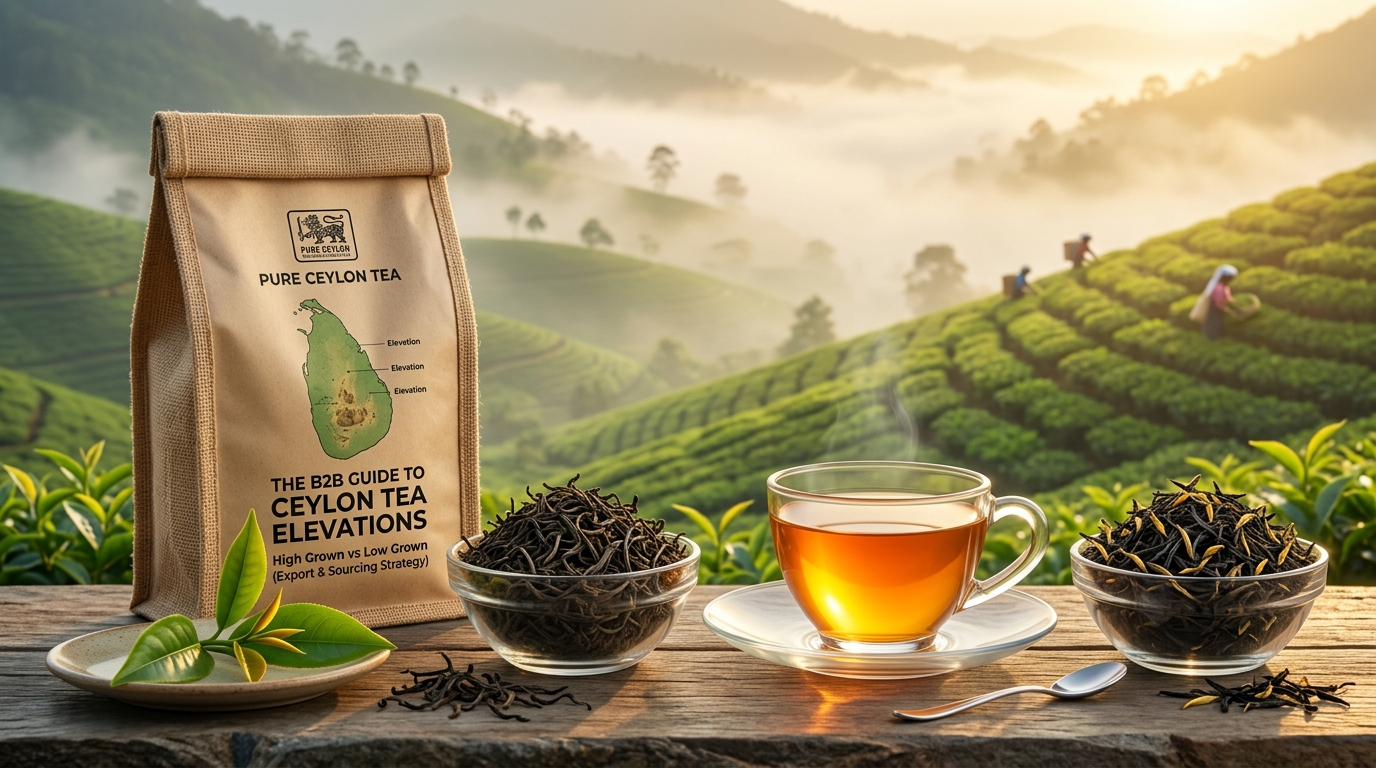
The B2B Guide to Pure Ceylon Tea Elevations: Choosing High Grown vs. Low Grown Tea
If you buy wholesale tea for your brand, restaurant chain, or import business, you know that quality and consistency matter. Ceylon tea from Sri Lanka is world-famous, but not all Ceylon tea tastes the same.
The secret to its rich variety lies in elevation—the height at which the tea bushes grow above sea level.
In this guide, we break down how Sri Lanka's growing zones affect flavor, color, and market appeal, so you can make the best sourcing decisions for your customer base.
Why Ceylon Tea Terroir Matters for B2B Buyers
Sri Lanka is a small island, but its weather varies greatly. The mountains in the center create microclimates. Rain patterns, sunshine, cool mountain air, and rich soil all shape the chemical composition of the tea leaf.
When buying bulk Ceylon tea, understanding these three elevation tiers helps you target specific consumer preferences:
- High Grown Tea (Above 4,000 feet / 1,200 meters)
- Medium Grown Tea (2,000 to 4,000 feet / 600 to 1,200 meters)
- Low Grown Tea (Sea level up to 2,000 feet / 600 meters)
1. High Grown Ceylon Tea: Light, Aromatic, and Refined
- Famous Regions: Nuwara Eliya, Dimbula, Uva
- Flavor Profile: Delicate, floral, brisk, and citrusy
- Liquor Color: Light golden to bright orange amber
High grown tea plants grow slowly in cooler temperature and cloud cover. This slow growth concentrates subtle essential oils inside the leaves.
Best For:
- Premium specialty tea brands
- Single-origin loose-leaf collections
- High-end afternoon tea services
- Customers who prefer lighter, aromatic black teas without milk
2. Medium Grown Ceylon Tea: Balanced, Full-Bodied, and Versatile
- Famous Regions: Kandy, Kandy slopes
- Flavor Profile: Rich, citrusy undertones, moderate strength
- Liquor Color: Bright reddish-copper
Medium grown teas offer the best of both worlds. They have enough strength to take milk, yet retain a pleasant aroma and bright flavor.
Best For:
- Commercial black tea blends
- Premium daily breakfast teas
- Ready-To-Drink (RTD) bottled tea production
- Hotel and foodservice distribution
3. Low Grown Ceylon Tea: Deep, Strong, and Caramelized
- Famous Regions: Ruhuna, Sabaragamuwa
- Flavor Profile: Bold, malty, naturally sweet, with honey and caramel notes
- Liquor Color: Dark burgundy to deep red
Low grown tea bushes enjoy warm sunshine and tropical humidity. The leaves grow large and dark, producing rich, heavy tea liquors loaded with antioxidants and natural sugars.
Best For:
- Middle Eastern and North African export markets (very popular in Iraq, UAE, and Egypt)
- Strong milk tea blends (Chai base, Boba tea bases)
- Cold brews and fruit-flavored iced teas
Key Sourcing Checklist for Import Partners
When evaluating suppliers in Sri Lanka, look for these three key points:
- The Lion Logo Certification: Ensure the package carries the official Ceylon Tea Lion Logo. This guarantees 100% pure Ceylon tea packed in Sri Lanka.
- Grade Selection: Choose the right leaf cut. OP (Orange Pekoe) for loose leaf visual appeal; BOPF (Broken Orange Pekoe Fannings) for quick-brewing tea bags.
- Direct Mill Sourcing: Partner with exporters who work directly with local tea gardens to ensure batch-to-batch consistency and full traceability.
By matching the elevation to your target consumer's tastes, you can build a more profitable tea product line with repeatable customer satisfaction.