
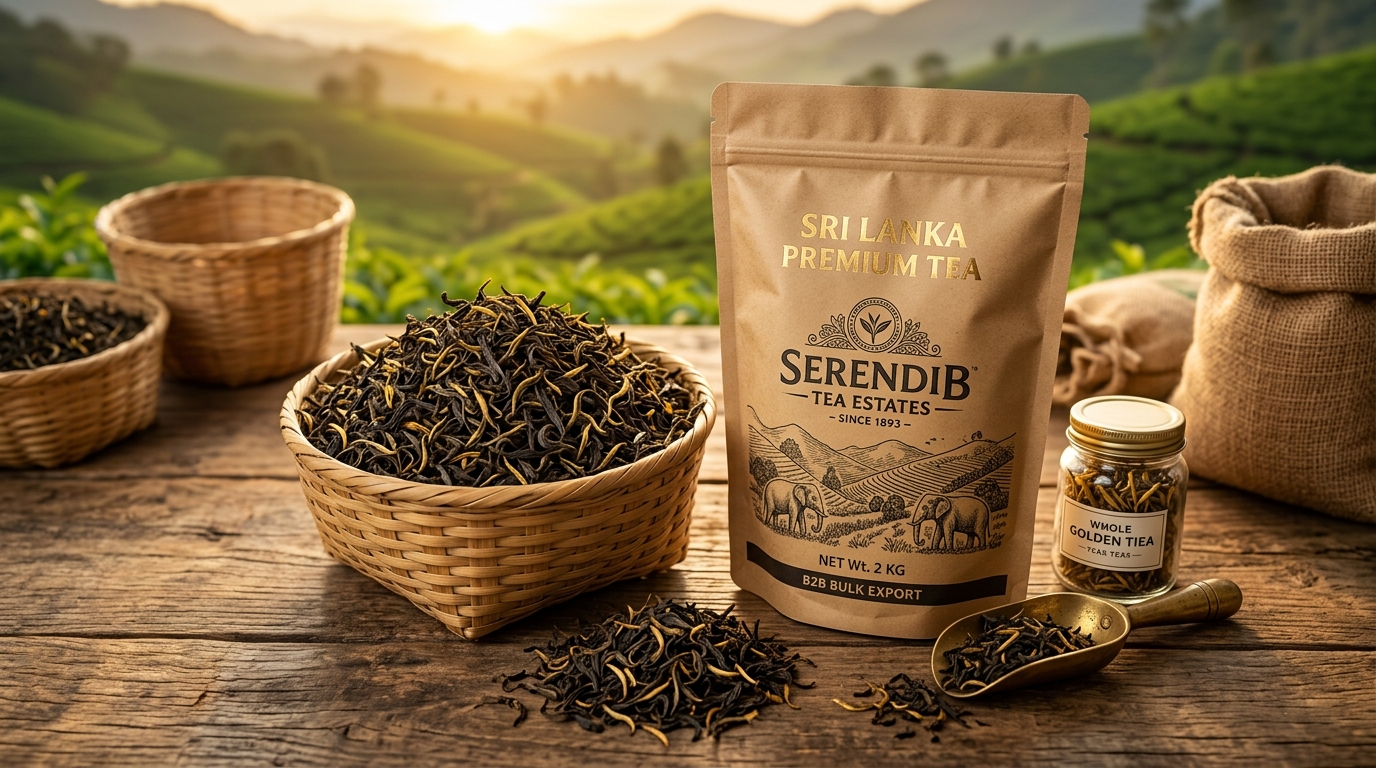
A Buyer's Guide to Tea Packaging: How to Keep Leaves Fresh on Long Sea Voyages
For the international tea merchant, the journey from the high-altitude estates of Sri Lanka to your warehouse is a test of logistics and material science. Tea is a living, delicate product. Once it leaves the vacuum or controlled environment of a factory, it faces the harsh realities of sea freight: fluctuating temperatures, high humidity, and the risk of taint from moisture or external odors.
As a procurement director, your primary responsibility is to ensure that the tea arriving at your destination is as vibrant and aromatic as the day it was packed. This guide provides the technical framework to navigate the sourcing process, from the auction floor to the shipping container, ensuring your cargo survives the long sea voyage intact.
1. Sourcing Channels: Auctions, Direct Estates vs Wholesalers
The way you source tea dictates your control over quality and packaging. Understanding the landscape is the first step in risk mitigation.
The Colombo Tea Auction: This is the heart of the industry. It is a centralized, transparent platform where estates sell their production. Buying through the auction gives you access to a massive variety of grades and origins. However, it requires a relationship with a licensed broker who can act as your eyes and ears on the ground.
Direct Estate Partnerships: For brands looking for consistency, direct sourcing is often preferred. By partnering directly with a tea garden, you can dictate specific plucking standards, manufacturing protocols, and—crucially—custom packaging requirements. This eliminates the uncertainty of the auction block but requires higher volume commitments.
Wholesalers and Exporters: If your volume is smaller, exporters are your best entry point. They aggregate tea from multiple estates and manage the logistics, blending, and export documentation. When working with an exporter, you must audit their facility to ensure they adhere to strict food safety standards and have the machinery necessary for specialized packaging.
2. Understanding Grades, Particle Sizing & Technical Specifications
Before you worry about the box, you must understand the leaf. Tea grades are not about quality in the sense of "good vs. bad," but rather about physical size and appearance.
- Whole Leaf: These are the largest, most intact leaves. They offer a slow, layered infusion and are highly prized by connoisseurs. They are robust but require careful handling to avoid crushing during transit.
- Broken Leaf: Smaller particles that infuse more quickly. These are the workhorses of the tea industry, providing a strong, consistent cup.
- Fannings and Dust: These are the smallest particles, typically used in high-quality tea bags. Because of their high surface area, they are the most susceptible to oxidation and moisture damage.
When sourcing, ensure your technical specifications match your target market. If you are selling to high-end cafes, specify a consistent whole-leaf grade. If you are producing tea bags, ensure the fannings are clean and free of excessive stalk or fiber. You can explore more about types of grades to refine your selection.
3. Testing Pre-Shipment Samples (PSS) Before Contract Signing
Never sign a contract based on a generic brochure or a past season's sample. A Pre-Shipment Sample (PSS) is your insurance policy.
When you request a PSS, you are asking for a representative sample from the exact batch that will be packed into your container. Once the sample arrives, perform a sensory evaluation:
- Visual Inspection: Check for uniformity in color and size.
- Aromatic Profile: Does it have the characteristic nose of the region? (e.g., the bright, floral notes of Nuwara Eliya vs. the malty intensity of Dimbula).
- Liquor Test: Infuse the tea under controlled conditions. Note the color, clarity, and taste profile.
If the PSS meets your standards, seal it and keep it as a reference. When the shipment arrives, compare the bulk product to this sealed sample. Any deviation is grounds for a quality dispute.
4. Packaging Integrity & Moisture Barrier Protection
This is the most critical stage for long-haul shipping. Tea is hygroscopic—it wants to pull moisture from the air. If the humidity in the shipping container spikes, your tea will lose its crispness and potentially develop mold.
Multi-Wall Paper Sacks: These are the industry standard for bulk shipment. They are sturdy and provide a degree of physical protection. However, paper alone is not enough to stop moisture migration.
Aluminum Foil Barrier Liners: This is your non-negotiable requirement. High-quality tea should be packed in food-grade aluminum foil liners within the paper sacks. The foil acts as a total vapor barrier, preventing moisture, oxygen, and external odors from penetrating the leaves.
Vacuum Packing: For ultra-premium, small-batch shipments, consider vacuum sealing. This removes oxygen entirely, halting the oxidation process and keeping the tea in a "frozen" state of freshness. While more expensive, it is the only way to guarantee that delicate white teas arrive in pristine condition.
5. Order Minimums (MOQs), Pricing Structures & Lead Times
Understanding the economics of the supply chain helps you plan better and avoid stockouts.
| Grade / Product Tier | Minimum Order Quantity (MOQ) | Production Lead Time | Best Use Case | Price Tier |
|---|---|---|---|---|
| Single Estate Whole Leaf | 500kg | 4–6 Weeks | Premium Retail | High |
| Standard Black Tea Blend | 1,000kg | 3–4 Weeks | Foodservice / Cafe | Mid |
| Bulk Fannings/Dust | 2,500kg | 2–3 Weeks | Tea Bag Production | Value |
| Private Label Retail | 5,000kg | 6–8 Weeks | Grocery/Supermarket | Premium |
Always factor in the "Incoterms" when negotiating pricing. Whether you are buying FOB (Free on Board) or CIF (Cost, Insurance, and Freight), ensure you understand who carries the risk during the sea voyage. You can review standard export terms to clarify your liabilities.
6. The Complete Buyer's Quality Checklist: Inquiry to Delivery
To ensure your supply chain remains secure, follow this standardized protocol for every order.
Buyer's Safe Sourcing & Quality Checklist
Frequently Asked Questions About Wholesale Sourcing
Why is aluminum foil lining essential for long-sea transit? Tea is hygroscopic, meaning it absorbs moisture and ambient odors. Aluminum foil acts as a vapor barrier, preventing humidity from damaging the leaves and preserving the volatile essential oils that define the tea's aroma.
What is the difference between a Pre-Shipment Sample and a Production Sample? A Pre-Shipment Sample (PSS) is taken from the specific lot intended for your order. It allows you to verify quality before the cargo is loaded, whereas a general sample is merely a representative of the estate's style.
How do I determine the right tea grade for my market? Whole leaf grades are generally preferred for premium loose-leaf retail, while broken grades or fannings are better suited for high-volume tea bag production due to their faster infusion rate and consistent particle size.
What is the purpose of the Colombo Tea Auction? The Colombo Tea Auction is the world's most transparent and efficient price-discovery mechanism for Ceylon tea. It connects global buyers directly with estates, ensuring fair pricing and traceability.
How can I prevent mold growth during sea voyages? Ensure the moisture content of the tea is below 4.5% at the time of packing and mandate the use of high-grade, food-safe desiccants inside the master shipping container to manage micro-climatic humidity.
Final Considerations for the Professional Buyer
Sourcing tea is not merely a transaction; it is an act of preservation. By the time you receive your shipment, the tea has traveled thousands of miles across different climate zones. If you have insisted on proper aluminum barrier packaging, used reputable shipping lines, and maintained strict quality control protocols at each step, the result will be a cup that honors the labor of the tea pluckers and the unique terroir of the region.
The best tea buyers are those who treat the packaging as part of the product. When you take the time to specify the right materials and verify the process, you protect your brand reputation and ensure your customers receive the authentic, aromatic experience they expect from high-quality Ceylon tea. For further guidance on maintaining your inventory, we recommend reviewing our resources on quality standards to ensure your warehouse storage practices match the rigor of your shipping requirements.