
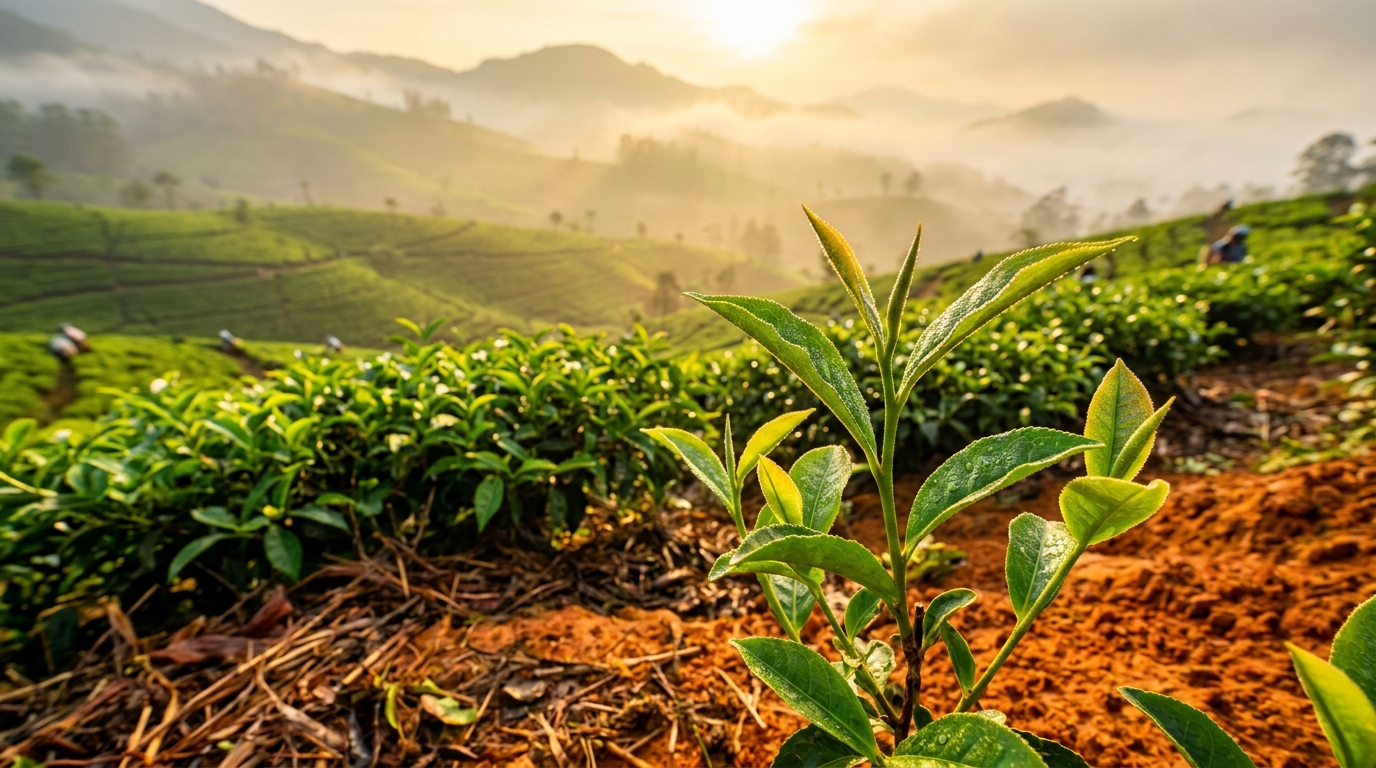
Ceylon Tea Mountain Soil: How Earth and Minerals Craft Sweeter Tea
High in the misty highlands of Sri Lanka, tea bushes stretch across steep slopes where cool mountain air meets bright tropical sunshine. Beneath those vibrant green leaves lies the true secret to one of the world's most beloved beverages: deep, mineral-rich mountain earth. Every cup of Ceylon tea carries the story of this unique soil, transformed by nature and handed down through generations of careful cultivation.
When you sip a freshly brewed pot of high-grown tea, you are tasting a delicate balance of nature's finest elements. The natural minerals resting deep within Sri Lanka's ancient bedrock nourish the plant daily. Combined with pristine rainwater and gentle mountain breezes, this earth helps the tea bush produce leaves packed with natural sweetness, lively briskness, and unforgettable aroma.
Understanding how mountain soil shapes flavor reveals why single-origin Sri Lankan teas taste so remarkably clean and full-bodied. Let us journey into the soil, science, and sunshine that make these leaves truly exceptional.
1. The Ceylon Tea Plant: What Makes Sri Lankan Leaves Unique
All authentic tea comes from a single evergreen plant known as [Camellia sinensis](/discover/botanical-science). However, just like wine grapes, the tea bush changes its personality based on where it grows. In Sri Lanka, the tea plant has spent over a century adapting to tropical mountain ranges, coastal hills, and sun-drenched valleys.
The tropical island climate gives the tea plant ideal growing conditions year-round. Unlike temperate climates where tea bushes go dormant during freezing winters, Sri Lankan tea bushes produce fresh, tender shoots continually. The top two leaves and a soft bud—lovingly gathered by hand—are harvested every seven to fourteen days.
       [ Sunlight & Tropical Rain ]
    [ Tender Fresh Leaves & Bud ]
  [ Mineral-Rich Mountain Soil (pH 4.5–5.5) ]
What makes Sri Lanka's leaves truly special is their resilience and sensitivity to altitude. Higher up in the mountains, cooler temperatures cause the tea bush to grow more slowly. This slower growth encourages the plant to concentrate its natural nutrients, essential oils, and leaf juices inside each bud, giving the tea a deeper, cleaner flavor.
Whether growing near coastal breezes or up in misty mountain clouds, the plant drinks up nutrients from the soil below. This delicate link between earth and plant is the foundation of authentic Ceylon tea character.
2. Rich Mountain Soils: Why Sri Lanka's Earth Creates Sweeter Tea
The soil in Sri Lanka's high country is unlike tea-growing earth found anywhere else in the world. Formed over millions of years from ancient granite and gneiss rock, these mountain slopes feature deep red-yellow soils filled with vital minerals like potassium, magnesium, and iron.
Tea plants thrive best in slightly acidic soil, ideally with a pH balance between 4.5 and 5.5. The natural acidity of Sri Lankan mountain soil allows the tea bush to absorb essential nutrients easily. Here is how these earth minerals shape the flavor in your mug:
- Potassium: Strengthens the plant's natural cellular walls and boosts the formation of natural sugars, giving the brewed tea a smooth, subtle sweetness.
- Magnesium: Drives healthy photosynthesis, helping the leaf produce rich chlorophyll and natural aromatic compounds.
- Iron and Phosphorus: Build early leaf strength and add a deep, golden-amber color to the infused liquid.
SRI LANKAN MOUNTAIN SOIL NUTRIENTS
In famous regions like Nuwara Eliya, known as the "Champagne of Teas," and Dimbula, the soil contains rich organic matter formed by decaying forest leaf litter. This natural humus holds rainwater like a sponge, releasing steady moisture and balanced minerals directly to the tea roots.
Because the soil delivers a steady supply of natural nutrients, the tea leaves develop less harsh bitterness and much more natural sweetness. The result is a refined, well-rounded cup that tastes refreshingly bright.
3. The Withering Stage: How Fresh Leaves Begin Their Flavor Journey
Once the tender tea leaves are plucked from the mountain slopes, their journey toward becoming fine tea begins immediately inside the factory. The very first step in traditional orthodox manufacture is called withering.
During withering, freshly picked green leaves are spread out evenly over long, elevated wooden troughs. Large fans blow gentle streams of cool and warm air through the mesh beds for 12 to 18 hours. During this time, the leaves slowly lose about half of their moisture content.
Fresh Leaf Harvest: Air Circulation Troughs: Soft Leaf Ready for Rolling
 (80% Water Content)         (12 to 18 Hours)            (50% Water Content)
Withering is not simply drying out the leaf; it is an essential chemical awakening. As excess water evaporates, several important natural changes take place inside the plant tissue:
- Moisture Balance: The leaf softens, turning flexible like soft leather so it can be rolled without shattering into tiny bits.
- Sugar Concentration: As water departs, natural leaf sugars become concentrated, laying the foundation for a sweet aftertaste.
- Aroma Activation: Natural plant enzymes begin releasing sweet, fruity, and floral aroma compounds that were previously trapped inside the watery leaf tissue.
If withering is done too quickly, the leaves retain harsh grassy flavors. Skilled factory managers check the leaves by hand, feeling for the exact moment when the leaf turns soft, fragrant, and ready for the next stage.
4. Rolling and Oxidation: How Green Leaves Turn into Rich, Brisk Black Tea
After withering, the soft leaf passes into large brass rolling tables. Gentle mechanical rolling twists and shapes the leaf while bruising its delicate cell walls. This action releases natural juices and exposes them to the cool, oxygen-rich mountain air—a step known as oxidation.
Oxidation is the natural process that transforms green leaves into bright, aromatic Ceylon black tea. Oxygen interacts with natural plant polyphenols, turning the green juices into vibrant golden and coppery-red compounds.
How Tea Leaves Transform into Pure Ceylon Black Tea
1. Gentle Leaf Rolling
Careful mechanical rolling gently bruises the leaf cells, releasing natural plant juices to begin oxidation
2. Fresh Air Reaction
Natural plant enzymes react with cool mountain air, turning the green leaf a warm coppery gold
3. Brisk Flavor Formation
Beneficial tea compounds (theaflavins) develop, giving Ceylon tea its signature golden glow and refreshing briskness
4. Rich Body & Color
Deep red and amber compounds (thearubigins) develop to give the brewed tea its rich, satisfying body
5. Hot Air Firing
Hot dry air bakes the leaves at peak flavor, locking in freshness and delicate aromas with crisp 3% moisture
The balance between briskness and depth depends heavily on how long oxidation is permitted to continue. Shorter oxidation preserves floral notes and pale golden colors, while longer oxidation creates deep amber liquors with sweet malt or caramel undertones.
Once oxidation reaches its ideal peak, the tea passes into a hot-air dryer. The heat stops oxidation instantly, locking in the natural flavors, delicate scents, and vibrant colors that make Ceylon tea famous around the globe.
5. Sri Lanka's Famous Tea Bush Varieties (TRI Clones)
To preserve and enhance the unique characteristics of mountain soil, scientists at the Tea Research Institute of Sri Lanka (TRI) in Talawakelle have spent decades studying plant botany. Instead of planting tea from unpredictable seeds, tea estates cultivate specific, highly prized plant selections known as "TRI Clones."
Clones are created by taking stem cuttings from mother plants that exhibit extraordinary flavor, strength, and climate resilience. These cuttings are rooted in nursery bags before being planted into estate fields.
Mother Plant Choice: Stem Cutting: Nursery Rooting: Estate Field Planting
 (Elite Flavor/Vigor)      (Single Leaf Node)   (4 to 6 Months)       (100% Genetics Preserved)
Here is a guide to some of Sri Lanka's famous tea plant varieties and how they transform soil minerals into cup character:
| Tea Bush Variety or Stage | Where It Grows Best | Natural Leaf Flavors Developed | What It Tastes Like in the Cup |
|---|---|---|---|
| TRI 2023 Clone | Mid and High Elevation Slopes | High concentrations of floral oils and rich plant sugars | Refreshingly bright, with light citrus notes and a sweet finish |
| TRI 2025 Clone | High Mountain Valleys | Balanced tannins and mineral salts absorbed from acidic soil | Full-bodied, brisk, with a rich golden color and gentle maltiness |
| TRI 2026 Clone | Misty High Peaks | Slow-growing leaves with concentrated essential aromatic oils | Delicate, highly aromatic, featuring subtle floral and pine notes |
| TRI 2043 Clone | High & Low Elevation Belts | Leaves rich in natural reddish pigments and sweet plant sap | Exceptionally smooth, deep amber color, with honey-like sweetness |
Each variety reacts differently to local mountain soils. estate managers select specific clones that best match their local altitude, rainfall pattern, and soil type. This careful matching of plant genetics to local earth ensures that every leaf harvested reaches its full potential.
6. Mountain Mist and Sunshine: Nature's Recipe for Pure Flavor
Soil provides the building blocks, but climate acts as the master chef. Sri Lanka's high-grown tea country enjoys a unique microclimate created by sweeping mountain ridgelines, dense tropical forests, and shifting monsoon winds.
During the daytime, bright equatorial sunlight warms the slopes, encouraging leaves to synthesize natural plant sugars through photosynthesis. As evening falls, temperatures drop sharply, bringing cool mountain mist and crisp breezes.
   [ Warm Daytime Sun ]: Drives sugar & energy production
[ Crisp Mountain Night Air ]: Slows plant growth, trapping sweet oils
This sudden temperature shift between day and night is called a day-to-night swing. The cold night air slows down the tea plant's respiration, preventing it from burning off the sugars it created during the day. Instead, those sweet sugars and fragrant oils remain trapped tightly inside the leaf buds.
This atmospheric dynamic explains why distinct regional flavors develop during regional dry seasons:
- Eastern Slopes ([Uva Region](/regions/uva-ceylon-tea)): Dry, hot winds blowing across the mountain ridges during the summer months cause the leaves to dry slightly on the bush, creating a legendary menthol and wintergreen fragrance.
- Western Slopes ([Dimbula Region](/regions/dimbula-ceylon-tea)): Early year dry weather paired with cold nights yields bright, rosy-red liquors with crisp floral notes.
- Central Valleys ([Uda Pussellawa](/regions/uda-pussellawa-ceylon-tea)): Frequent mist and light rains create medium-bodied teas with tangy freshness and a pinkish tint.
Nature's recipe—combining rich mountain soil, sharp temperature changes, and passing mists—gives every single origin tea its unique profile. You can explore how these diverse flavor profiles compare using our interactive sensory flavour wheel.
CEYLON TEA MOUNTAIN TERROIR TRIANGLE
Frequently Asked Questions About Ceylon Tea Botany and Plant Science
Why does tea grow so well in Sri Lanka's mountain soil?
Sri Lanka's mountain soil is naturally acidic, with a pH of 4.5 to 5.5, which is ideal for tea plants. The soil is rich in potassium, iron, and organic matter from ancient decay, giving the tea bush the exact nutrient balance it needs to grow healthy, sweet leaves.
How does altitude affect the taste of Ceylon tea?
Teas grown at high altitudes (above 4,000 feet) grow more slowly due to cooler weather. This slower growth allows the leaves to accumulate a higher concentration of natural sugars and aromatic essential oils, producing a lighter, more floral, and sweeter cup compared to low-grown teas.
What is the difference between single-origin tea and blended tea?
Single-origin Ceylon tea comes from one specific estate or region, allowing you to taste the unique soil, weather, and altitude of that location. Blended teas mix leaves from multiple sources to achieve a consistent taste regardless of seasonal weather shifts.
Why are high-grown tea leaves lighter in color when brewed?
High-grown leaves develop fewer dark color compounds during processing because they contain higher levels of aromatic essential oils and light polyphenols. This gives high-grown teas like Nuwara Eliya their pale, champagne-like golden color.
Does mountain soil affect the health benefits of tea?
Yes. Tea grown in rich, healthy mountain soil absorbs essential minerals that support plant wellness. These healthy plants produce higher concentrations of beneficial antioxidants called polyphenols, which give tea its refreshing qualities and wellness properties.
What does the Pure Ceylon Tea Lion Logo mean on a pack?
The Pure Ceylon Tea Lion Logo guarantees that the product contains 100% pure Sri Lankan tea, grown, harvested, and packaged directly at the source. It ensures the tea has not been mixed with lower-quality leaves from other origins.
Pure Ceylon Tea Lion Logo Certification
Conclusion: The Earth in Every Sip
The exceptional sweetness and refreshing character of Ceylon tea are no accident. They are the direct result of a perfect harmony between Sri Lanka's acidic mountain earth, mineral-rich bedrock, tropical sunshine, and mist-laden nights.
Every stage of the journey—from root absorption deep in red mountain soils to careful withering, gentle orthodox rolling, and precision oxidation—preserves the pure voice of the land. When you pour a hot cup of genuine single-origin tea, you are experiencing the living agronomy of an island home to some of the finest tea estates on Earth.
Ready to explore these remarkable flavors yourself? Browse our full selection of Ceylon black teas, or use our interactive brewing calculator to steep your next cup to scientific perfection.