
How Elevation Defines Pure Ceylon Tea: A B2B Sourcing Guide for Global Buyers
When buying bulk tea for international distribution, understanding terroir is essential. In Sri Lanka, elevation is the single most important factor that shapes the flavor, color, and aroma of Pure Ceylon Tea. The island's unique topography creates distinct growing zones, grouped into three main elevations: High-Grown, Medium-Grown, and Low-Grown.
For B2B buyers, tea blenders, and private label brands, selecting the correct elevation ensures your product fits your market's local taste preferences and price points.
1. High-Grown Ceylon Tea (Above 4,000 Feet)
Regions: Nuwara Eliya, Uda Pussellawa, Higher Dimbula
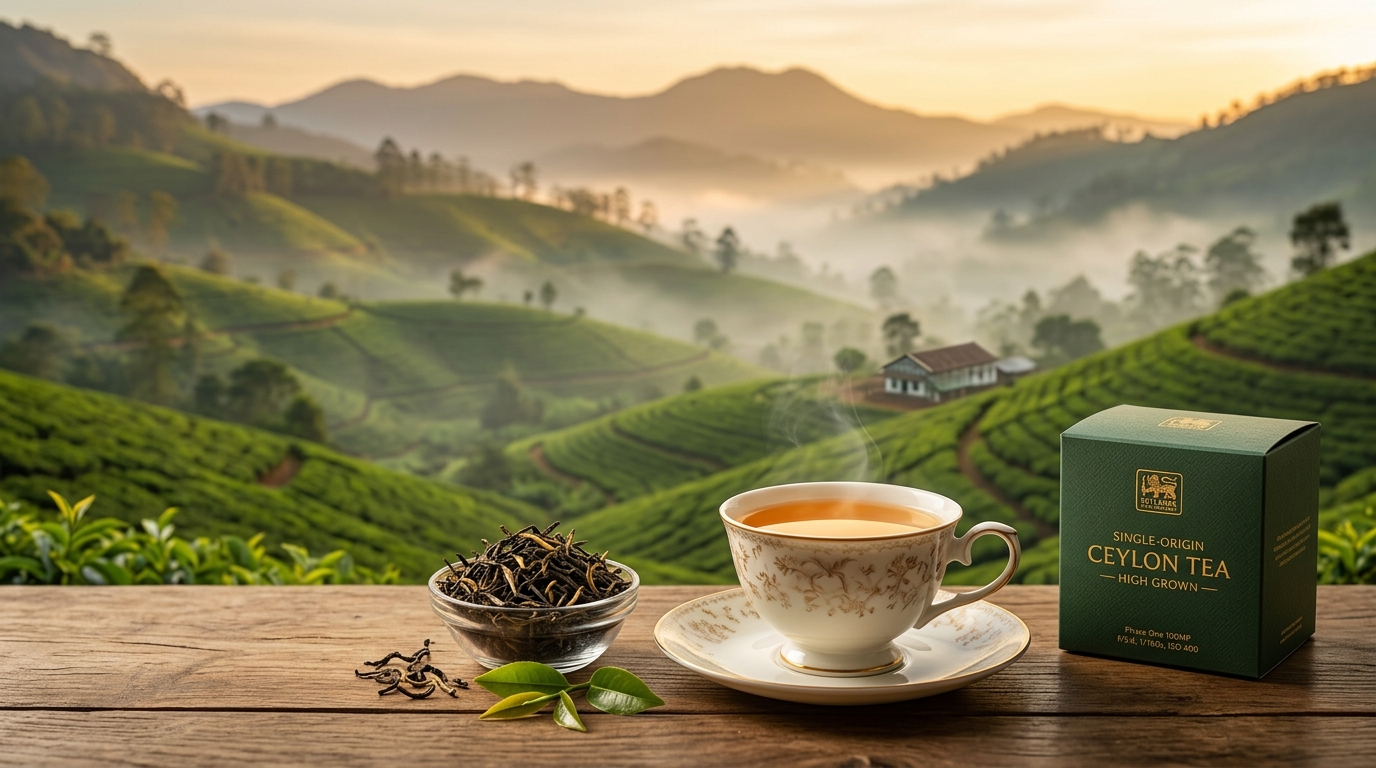
High-grown tea gardens sit high in the misty cloud forests. The cool climate and frosty nights slow down the growth of the tea bush (Camellia sinensis). This slow growth allows rich aromatic compounds to concentrate inside the tender leaves.
- Flavor Profile: Delicate, floral, citrusy, and bright with mild astringency.
- Liquor Color: Pale gold to light amber.
- Best B2B Applications: Premium single-origin retail tins, luxury teabags, delicate iced teas, and high-end foodservice catalogs.
- Key Buying Insight: Western European and East Asian premium markets prefer high-grown teas for their clean, crisp taste and elegant aroma.
2. Medium-Grown Ceylon Tea (2,000 to 4,000 Feet)
Regions: Kandy, Uva, Lower Dimbula
Medium-grown teas offer a versatile middle ground. They experience a mix of sunshine, rain, and mountain breezes. The legendary 'Uva seasonal wind' creates a distinct flavor profile highly prized across the world.
- Flavor Profile: Well-rounded, smooth, naturally sweet, with medium body.
- Liquor Color: Rich copper to bright reddish-orange.
- Best B2B Applications: Everyday commercial blends, restaurant house teas, and ready-to-drink (RTD) bottled teas.
- Key Buying Insight: Medium-grown teas are the perfect base for commercial breakfast blends because they pair well with milk without losing their authentic tea character.
3. Low-Grown Ceylon Tea (Sea Level to 2,000 Feet)
Regions: Ruhuna, Sabaragamuwa
Low-grown tea leaves thrive in warm, humid weather and nutrient-rich soil. The bushes grow faster and develop large, dark leaves full of natural juices and minerals.
- Flavor Profile: Strong, full-bodied, malty, and naturally sweet.
- Liquor Color: Deep ruby-red to dark burgundy.
- Best B2B Applications: Heavy-bodied tea bags, chai tea blends, specialized loose-leaf grade markets, and RTD Karak tea mixes.
- Key Buying Insight: Buyers in the Middle East, Central Asia, and North Africa favor low-grown Ceylon teas like FBOP1 and BOP1 grades because they offer a deep color and rich taste that performs exceptionally well when brewed strong with sugar or cardamom.
Quality Assurance: Look for the Ceylon Tea Lion Logo
When importing Ceylon tea, always verify that your supplier is certified by the Sri Lanka Tea Board. The official Lion Logo guarantees that the product contains 100% Pure Ceylon Tea packed in Sri Lanka, meeting strict government export quality rules.
Understanding these elevation zones allows B2B buyers to order the exact cup profile their customers want, minimizing sample rounds and speeding up sales cycles.