
From Green Leaves to Brisk Black Tea: The Natural Oxidation Process Explained
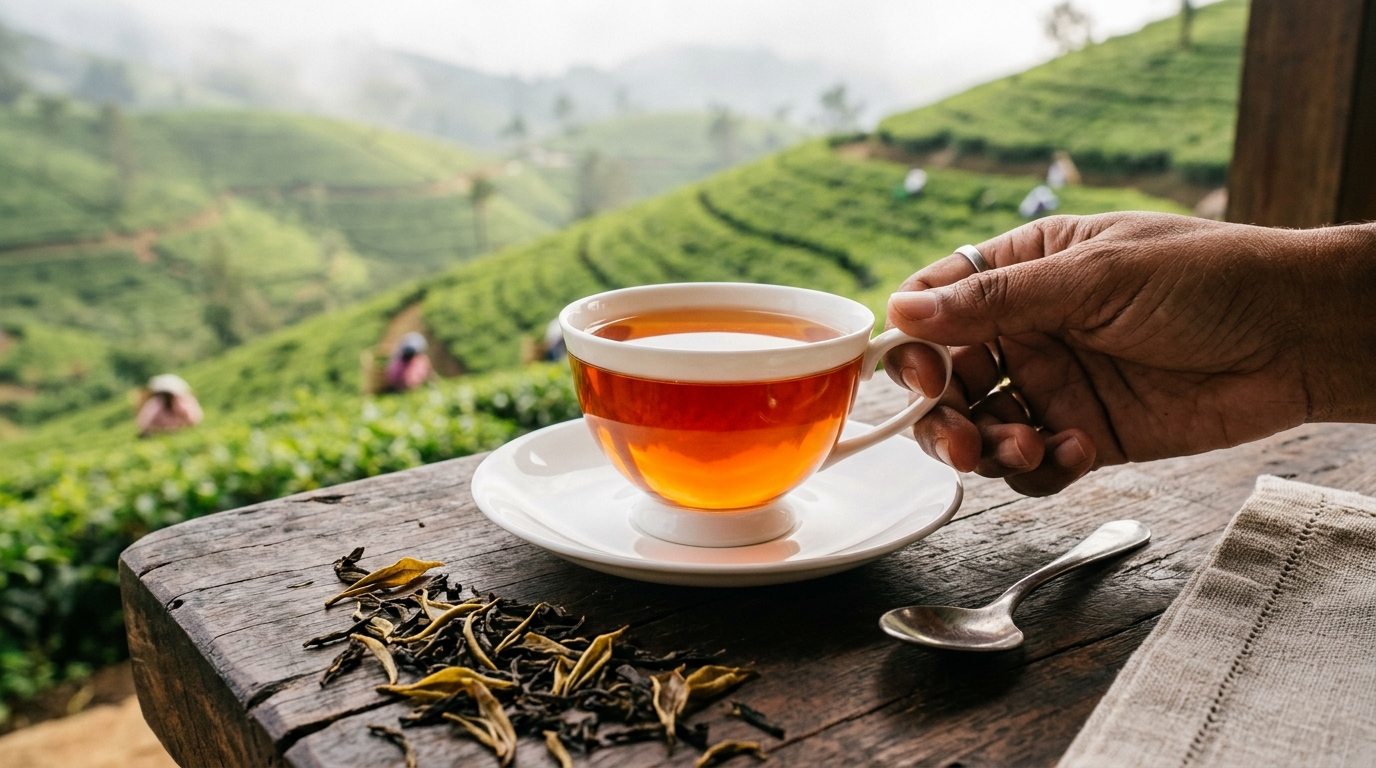
The journey of a cup of Ceylon tea begins long before it reaches your teapot. It starts in the cool, misty air of the central highlands of Sri Lanka, where the Camellia sinensis plant draws its strength from rich, mineral-laden soil. To the casual observer, a tea leaf is simply a leaf. To the agronomist, it is a complex biological factory, packed with enzymes, polyphenols, and essential oils waiting to be unlocked.
The transition from a fresh, vibrant green leaf to the brisk, aromatic, and deep-amber black tea we cherish is not a matter of chance. It is a precise, controlled scientific process that relies on the plant’s own internal chemistry. By understanding how fresh air and natural enzymes interact with the leaf structure, we can better appreciate the craftsmanship that defines every type of Ceylon black tea.
1. Plant Taxonomy, Morphology & Cultivars
The tea plant, Camellia sinensis, belongs to the Theaceae family. Within the context of Ceylon tea, we primarily cultivate two main varieties: the Assamica leaf, which is larger and more robust, and the Sinensis leaf, which is smaller and more delicate.
In the high-altitude estates of Nuwara Eliya, the plants often show unique adaptations to the mountain climate. These leaves are thick with trichomes—tiny, hair-like structures that protect the plant from harsh winds and intense sunlight. These trichomes are often what you see as the "golden tips" in premium grades. These tips are not just aesthetic; they are reservoirs of concentrated amino acids and essential oils, which contribute to the tea’s characteristic briskness and floral aroma.
2. Soil Chemistry, Horizons & Mineral Absorption
The quality of tea is fundamentally tied to the earth beneath the roots. Sri Lankan tea estates are situated on unique soil horizons, often characterized by red-yellow podzolic soils. These soils are acidic, typically ranging between 4.5 and 5.5 on the pH scale. This acidity is crucial; it allows the tea plant to absorb essential minerals like potassium, magnesium, and manganese efficiently.
These minerals act as catalysts for the development of flavor precursors. For instance, the mineral composition of the soil in Dimbula differs from that of Kandy, resulting in distinct cup profiles. When the plant absorbs these nutrients, it incorporates them into its cellular structure. During the traditional manufacturing process, these stored nutrients interact with enzymes to create the complex flavor compounds that characterize a world-class tea.
3. Biochemical Transformations During Harvesting & Processing
The heart of tea manufacturing is the oxidation process. When a leaf is plucked, it remains alive for a short period. Once it reaches the factory, it undergoes a series of steps designed to trigger a controlled chemical reaction.
Cellular Transformation Pathway
- Mechanical Harvesting & Withering: The plucked leaf is spread on troughs where air is circulated. As the leaf loses 40–50% of its moisture, the cell walls become flaccid, and the leaf begins to concentrate its internal esters.
- Cellular steeping & Rolling: The leaves are passed through rollers that apply mechanical pressure. This ruptures the cell vacuoles, bringing enzymes into contact with polyphenols.
- Aerobic Enzymatic Reaction: This is the "oxidation" phase. Oxygen reacts with the leaf's enzymes (specifically polyphenol oxidase) to turn simple polyphenols into complex compounds like theaflavins and thearubigins. These are responsible for the tea's color, body, and "brisk" mouthfeel.
- Thermal Deactivation & Firing: Once the desired level of oxidation is achieved, the tea is passed through a dryer. High-heat airflow stops the enzymatic activity at the peak of flavor, ensuring the tea remains stable.
4. Climatic Influences: warm days and cool mountain nights, Sunlight & Humidity
The botanical science of tea is inseparable from the climate. In the high-elevation regions of Sri Lanka, the "day-to-night swing"—the temperature difference between day and night—is significant. During the day, the plant photosynthesizes, creating sugars and flavor precursors. At night, the cooler temperatures slow down the plant’s metabolism, causing it to store these compounds rather than burn them off.
This cycle is what creates the "briskness" of high-grown Ceylon tea. The humidity of the tropical monsoon also plays a role; it keeps the leaves supple and encourages slow, steady growth. This slow pace allows the plant to develop a more complex chemical profile compared to tea grown in lower, hotter, or drier environments.
5. Cultivar Breeding & Pest Resilience
Modern agronomy in Sri Lanka focuses on sustainability. Researchers at institutes like the Tea Research Institute of Sri Lanka work to breed cultivars that are not only high-yielding but also resilient to climate change and common pests.
By selecting mother bushes that exhibit specific traits—such as high leaf density, drought tolerance, or unique flavor characteristics—growers can ensure the longevity of their estates. These resilient varieties are designed to maintain their flavor complexity even under environmental stress, ensuring that the consumer receives a consistent, high-quality product that honors the history of Ceylon tea.
Agronomic & Flavor Profile Table
| Variety or Cultivar | Optimal Elevation / Climate | Key Biochemical Compounds | Cup / Sensory Expression |
|---|---|---|---|
| High-Grown Sinensis | 4,000+ ft / Cool & Misty | High Theaflavins / Catechins | Floral, brisk, light amber |
| Mid-Grown Hybrid | 2,000–4,000 ft / Temperate | Balanced Polyphenols | Full-bodied, malty, smooth |
| Low-Grown Assamica | Sea level to 2,000 ft / Warm | Thearubigins / Tannins | Bold, dark, honey-sweet |
| Clonal "TRI" Series | Variable / Resilient | Optimized Amino Acids | Complex, consistent quality |
Frequently Asked Questions About Botanical Science & Cultivation
What happens to the leaf during the withering process? During withering, the leaf loses moisture and becomes soft. This evaporation concentrates the plant's natural juices and prepares the leaf structure to be bruised during rolling without shattering.
Why is the rolling process so important for black tea? Rolling is the mechanical action that breaks the leaf cell walls. Without this step, the enzymes inside the leaf would never meet the oxygen in the air, and the oxidation process—which turns green leaves into black tea—could not occur.
How does altitude affect the "briskness" of the tea? Cooler high-altitude air slows the leaf's growth. This allows the plant to accumulate higher concentrations of specific antioxidants and volatile oils, which translate to the sharp, refreshing sensation known as "briskness."
What role does the soil play in the final taste of the tea? The soil acts as the delivery system for nutrients. Different soil compositions provide different mineral inputs, which the tea plant uses to synthesize the specific aromatic compounds that give Uva tea its unique character compared to other regions.
Can tea be over-oxidized? Yes. If the oxidation process continues for too long, the tea loses its bright, brisk character and can become flat, dull, or overly bitter. Timing the firing process is a skill that takes years of expertise to master.
What is the difference between a tea "flush" and a standard harvest? A "flush" refers to the first growth of new leaves after a period of dormancy. These leaves are typically the most tender and contain the highest concentration of flavor-building compounds, often resulting in a more premium, delicate cup.
Final Thoughts on the Art of the Leaf
The transformation of a green leaf into a brisk, invigorating black tea is a testament to the harmony between nature and human expertise. From the specific pH of the soil to the precise moment a tea master decides to stop the oxidation process, every step is a calculated effort to capture the essence of the Sri Lankan highlands.
When you brew a cup of Ceylon tea, you are tasting more than just a beverage; you are experiencing the result of an intricate botanical process refined over generations. As you explore the different tea grades and regions, remember that the complexity in your cup is the direct result of these scientific principles. We invite you to continue your journey by learning more about the Ceylon tea ceremony and how to best appreciate the nuances of these exceptional teas.