
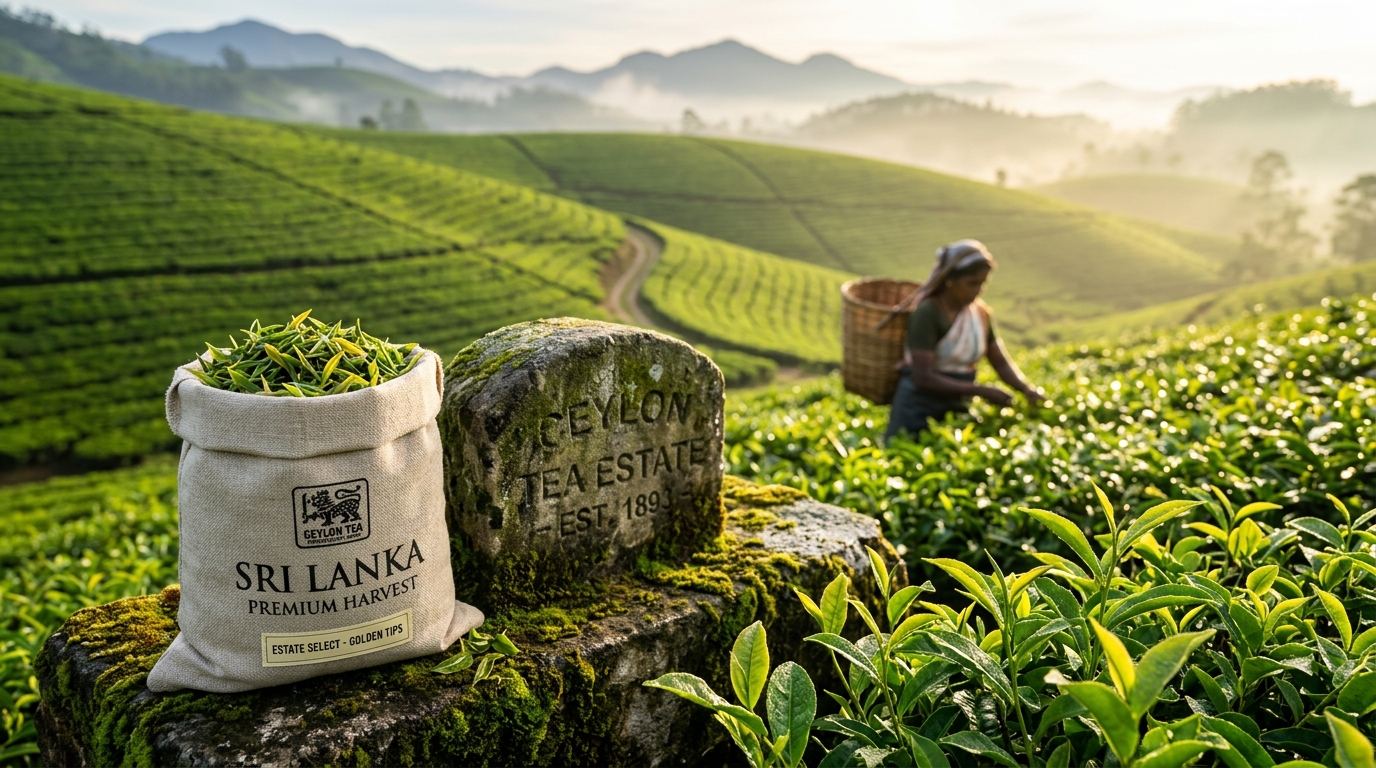
James Taylor and Field No. 7: The True Story of Ceylon Tea's Founding Father
In the mid-19th century, the central highlands of what was then British Ceylon were defined by the deep, intoxicating scent of roasting coffee. It was the island's gold. Planters had carved vast estates out of the dense, mist-shrouded jungle, believing the prosperity would last forever. But nature had other plans. A silent, microscopic menace—coffee rust—began to spread, turning vibrant, profitable plantations into withered landscapes of brown, brittle branches.
Amidst this economic collapse, one man looked at the dying coffee bushes and saw not an end, but a beginning. James Taylor, a young Scotsman, arrived in Ceylon in 1852 at the age of 17. By 1867, working on the Loolecondera estate, he made a decision that would redefine the global beverage industry. He cleared 19 acres of land, now famously known as Field No. 7, and planted the first systematic tea crop in Ceylon. With this quiet act, the era of "Ceylon Tea" was born.
The Crucible of Origins: The Crisis that Sparked Revolution
The transition from coffee to tea was not a choice made out of luxury; it was a desperate gamble for survival. By the late 1860s, the failure of the coffee crop had left the colonial agricultural economy in ruins. Thousands of investors faced bankruptcy.
James Taylor was uniquely positioned to see the potential in tea. Unlike many of his contemporaries who relied on traditional methods, Taylor was a tireless experimenter. He began his trials with seeds from the Assam variety, which he believed would thrive in the cooler, high-altitude climate of the Kandy region.
His initial success in Field No. 7 was modest, but it provided the proof of concept that the island’s mountainous terrain was perfectly suited for the Camellia sinensis plant. The combination of high-altitude mist, well-draining soil, and consistent rainfall created a unique terroir that would eventually yield a flavor profile distinct from any other tea in the world.
The Pioneers: Visionaries Who Built the Industry
James Taylor was not a man of grand speeches; he was a man of the soil. He lived among his workers, learning the local language and gaining a deep respect for the land. His dedication to the craft went far beyond planting.
He became a self-taught engineer, realizing early on that the quality of tea depended as much on the processing as it did on the growth. On the verandah of his small bungalow, he spent countless hours experimenting with how to roll and wither the leaves. He used wire mesh trays to wither the fresh leaves and hand-rolled them on tables, observing how the oxidation—or fermentation—process changed the leaf's character.
His persistence inspired a generation of planters. Figures like Thomas Lipton would later arrive to scale the industry, but it was Taylor’s foundational work at Loolecondera that provided the blueprint. He proved that tea was not just a crop, but a craft that required precision at every stage.
Engineering Feats: Railways, Bridges & Mountain Infrastructure
As the tea industry began to grow, the challenge shifted from growing the crop to moving it. The central highlands are rugged, characterized by steep valleys and narrow ridges. Transporting heavy chests of tea to the port of Colombo via bullock carts was slow, expensive, and risky.
The British administration recognized that the success of the tea industry was tied to the island's infrastructure. This led to one of the most ambitious engineering projects in colonial history: the construction of the mountain railway.
Engineers carved tunnels through solid rock and built massive steel bridges that spanned deep, forested gorges. This railway network, which still serves the country today, was the lifeline of the tea trade. It allowed fresh, fragrant tea to travel from the high-altitude estates like Nuwara Eliya and Dimbula directly to the waiting ships in the harbor. This logistical triumph ensured that the quality of the leaf was preserved from the field to the teacup.
The Invention of Processing Machinery
Taylor’s original verandah-based production was a marvel of ingenuity, but it could not satisfy the growing global appetite for tea. As demand soared, the "verandah factory" had to evolve.
The transition from hand-processing to mechanical production was driven by the need for consistency. Innovations in rolling machines, drying ovens, and sorting sifters allowed estates to process massive quantities of leaf while maintaining the delicate chemical profile of the tea.
Historical Milestones of Industrial Innovation
- 1. The First Experimental Acres: Early pioneers cultivate experimental crops, proving viability in mountain soil.
- 2. The Verandah Factory: Hand-rolling gives way to locally engineered wooden rolling tables.
- 3. First International Shipments: First commercial trial shipments reach London, receiving acclaim for briskness and color.
- 4. Founding of the Auction System: First public auctions convene, standardizing weekly international trade.
- 5. Modern Certification Era: The industry establishes global benchmarks for purity, sustainability, and origin protection.
These mechanical advancements did not replace the human touch; they supported it. Even today, the traditional process remains the gold standard, combining modern efficiency with the time-honored techniques pioneered by men like Taylor.
The Evolution of Public Auctions & International Trade
By the 1880s, the volume of tea produced in Ceylon was too large to be sold through private contracts alone. The industry needed a transparent, centralized system to establish fair value.
The founding of the Colombo Auction system was a watershed moment. It transformed the industry from a collection of isolated estates into a cohesive, globalized market. The auction system forced producers to adhere to strict quality standards, as buyers from around the world could compare the "liquor," color, and strength of various lots.
This created a competitive environment that rewarded excellence. Planters who could consistently produce high-quality grades—from delicate flowery pekoes to robust broken orange pekoes—saw their products command higher prices. This focus on quality is a legacy that defines Ceylon Black Tea to this day.
Living History: Preserving Craftsmanship in the Modern Era
Walking through the Loolecondera estate today, one can still feel the weight of history. The original stone foundations of Taylor’s bungalow remain, and the descendants of the early workers still tend the tea bushes with the same care their ancestors did.
The industry has moved toward sustainable practices, ensuring that the land remains productive for future generations. Modern estates are now models of environmental stewardship, protecting the botanical science that keeps the bushes healthy and the surrounding ecosystems vibrant.
The commitment to craftsmanship is the true heritage of James Taylor. It is a promise to the consumer that every cup of tea—whether it is a delicate Ceylon White Tea or a bold, malty Uva—is the result of centuries of refinement.
| Era / Year | Landmark Milestone | Key Person or Region | Why It Shaped the Modern Industry |
|---|---|---|---|
| 1867 | First Tea Planting | James Taylor (Loolecondera) | Proved commercial viability of tea in Ceylon soil. |
| 1873 | First Export Shipment | London Market | Established Ceylon Tea as a premium global commodity. |
| 1883 | First Public Auction | Colombo | Created a transparent, standardized global trade system. |
| 1890 | Industry Expansion | Thomas Lipton | Introduced global marketing to the average consumer. |
| 1925 | Tea Research | Tea Research Institute | Advanced the science of quality, yield, and sustainability. |
Frequently Asked Questions About the History & Heritage
What is the significance of Field No. 7 at Loolecondera? Field No. 7 is the site where James Taylor planted the first commercial tea bushes in 1867. It represents the birthplace of the Ceylon tea industry and remains a site of pilgrimage for tea enthusiasts.
Did James Taylor invent the tea processing machines? While Taylor pioneered hand-rolling on his verandah, he also helped refine early mechanical rollers, which were essential for scaling production to meet global demand as the industry grew beyond small-scale testing.
Why did Ceylon switch from coffee to tea? A devastating fungal disease known as 'coffee rust' wiped out the island's coffee plantations in the late 1860s, forcing planters to seek a more resilient crop that could thrive in the highland climate.
How did the railway change the tea industry? The expansion of the highland railway allowed tea to be transported quickly from remote mountain estates to the port of Colombo, ensuring freshness for export and significantly lowering logistical costs.
Is the original Loolecondera estate still producing tea? Yes, Loolecondera remains a working estate. Visitors can still see the original stone foundations and the site of Taylor’s first tea plantings, which continue to produce high-quality leaves today.
What makes Ceylon tea different from other teas? The unique combination of high-altitude mountain air, distinct soil chemistry, and the traditional orthodox processing methods ensures that Ceylon tea retains a unique character and flavor profile that is recognized globally.
Conclusion
The story of James Taylor and Field No. 7 is more than just a historical footnote; it is the genesis of an entire nation’s identity. From the humble, experimental verandah of a Scottish pioneer to the sophisticated, globally recognized Ceylon Tea industry of today, the path has been one of innovation, resilience, and an unwavering commitment to quality.
As you enjoy your next cup, consider the journey the leaf has taken—from the misty, high-altitude slopes of the central highlands to the precise mechanical refinement that ensures its flavor. To truly appreciate the depth of this heritage, we invite you to explore our regions and discover the unique characteristics that make every harvest a testament to the pioneers who came before. The legacy of 1867 lives on, one cup at a time.