
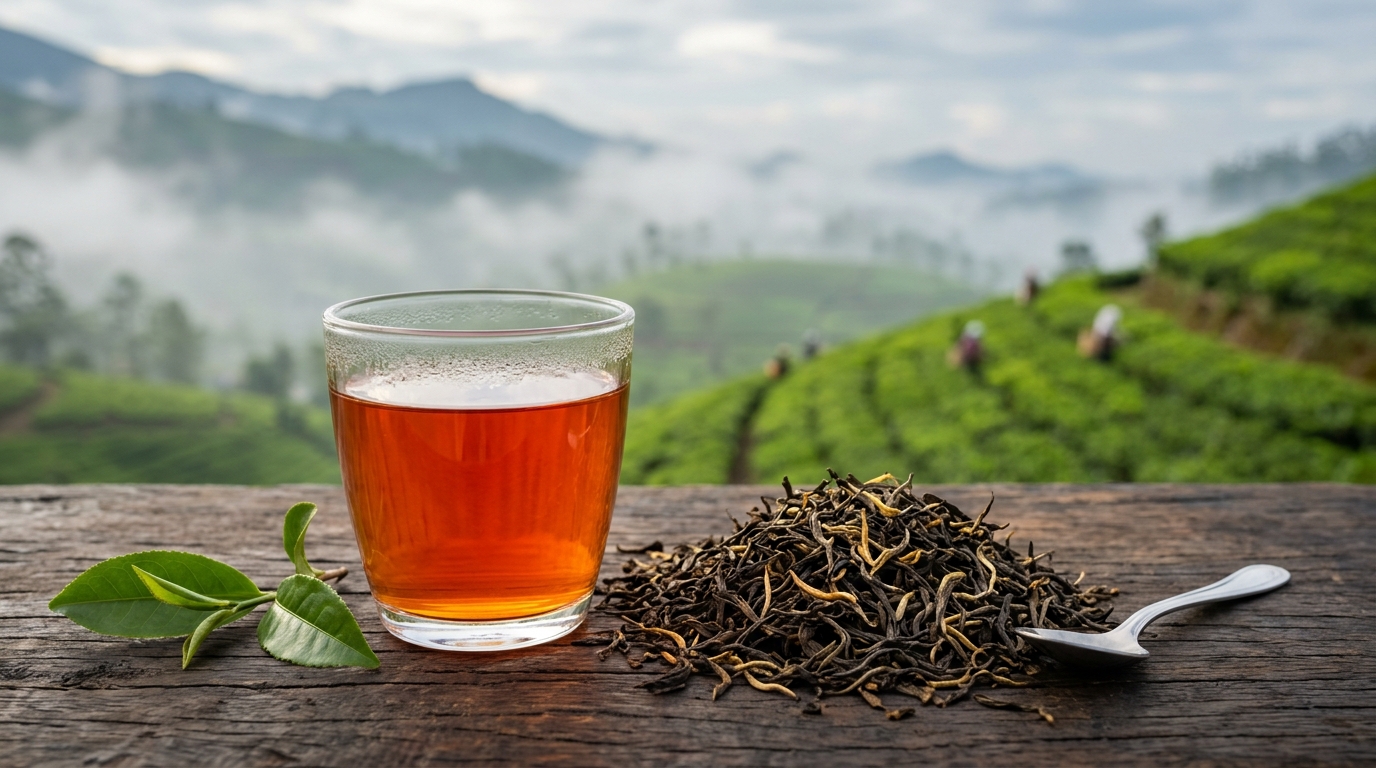
Kandy Ceylon Tea: The Historic Heart of Tea with a Rich, Warm Spiced Flavor
The mist rolls over the emerald ridges of the central highlands, cooling the air as it settles into the valleys of Kandy. This is not just a place on a map; it is the cradle of the world-renowned Ceylon tea industry. Here, the air carries a distinct, earthy sweetness, a sensory prelude to the bold, full-bodied liquor that defines Kandy tea. Unlike the delicate, floral teas of higher altitudes or the bright, sharp notes of the Uva plains, Kandy tea offers a comforting, reliable depth. It is a tea that commands attention, characterized by a deep infusion and a warm, spiced character that has defined the expectations of tea drinkers for over a century.
To understand the character of this tea is to understand the history of the land itself. When the coffee industry collapsed in the 1860s, it was the pioneering planters in these very hills who transitioned to tea. They turned the slopes of Kandy into the laboratory of the tea world, establishing the foundations of the traditional-process that we still celebrate today. Today, Kandy remains the vital mid-point of the Sri Lankan tea experience, offering a cup that is as rich in history as it is in flavor.
Geographic Geography, Topography & Elevation
Kandy sits at the heart of the central highlands, acting as the transition zone between the low-country plains and the high-altitude peaks. The tea gardens here are classified as mid-grown, typically nestled between 2,000 and 4,000 feet above sea level. This elevation is the "goldilocks zone" for the Kandy profile.
The topography is defined by rolling hills, steep slopes, and river valleys that channel moisture through the region. These slopes are essential, as they ensure excellent drainage—a critical factor for the health of the tea bush. Because Kandy does not reach the extreme altitudes of Nuwara Eliya, the tea plants grow at a moderate pace. This allows the bushes to develop a robust structure, resulting in a leaf that is hardy, dark, and rich in the polyphenols that contribute to the tea's full-bodied strength.
Seasonal Monsoons, Rain Shadow & Sun Exposure
The climate in Kandy is influenced by the dual impact of the monsoons. The region experiences the North-East and South-West monsoons, which keep the landscape lush and green throughout the year. However, it is the interplay of these rains with the mountain shadows that dictates the harvest quality.
During the dry spells, the tea bushes are stressed by the sun, which slows growth and concentrates the aromatic compounds in the young shoots. This concentration is what gives Kandy tea its signature warmth. Unlike regions where a single "peak" season defines the entire year, Kandy provides a consistent output. The microclimates created by the winding river valleys ensure that even during the monsoon, there are pockets of sunshine that allow for steady, high-quality production.
Soil Composition & Mineral Signatures
The soil of Kandy is a rich, red-yellow podzolic earth, deep and well-structured. Over centuries, the decomposition of organic matter from the tea bushes and the surrounding shade trees—often silver oaks or Albizia—has created a nutrient-dense environment.
The mineral signature of this soil is what separates Kandy tea from its counterparts. The iron-rich composition of the volcanic-origin soil imparts a certain weight to the tea liquor. When combined with the moderate humidity of the mid-elevations, the result is a cup that feels "heavy" on the palate in the most pleasant way. It is a grounding tea, one that holds its own against the addition of milk or a slice of lemon, which is why it remains a favorite for breakfast blends worldwide.
Iconic Growing Estates & Traditional Producers
The Kandy region is home to some of the oldest tea estates in Sri Lanka. These properties are often family-managed, preserving the traditional-process that was refined in the late 19th century.
Estates in the Galaha and Pussellawa areas, for instance, have maintained the integrity of their planting for generations. Many of these facilities still utilize the original rolling machines and firing techniques, ensuring that the leaf is handled with a level of care that modern, mass-production methods often overlook. Visiting these estates, one sees a blend of colonial-era architecture and state-of-the-art sustainability practices, a testament to the industry's commitment to quality over quantity.
The Regional Sensory Profile: Cup Character & Tasting Notes
When you brew a cup of Kandy tea, the first thing you notice is the color. It is a deep, glowing amber-red, sometimes bordering on a dark copper. The aroma is equally distinct—warm, slightly malty, and carrying a hint of spice that reminds one of cinnamon or clove.
On the palate, Kandy tea is assertive. It provides a full-bodied mouthfeel that is neither too astringent nor too thin. It is the definition of a "comforting" tea. The finish is clean, with a subtle sweetness that lingers. For those who enjoy Ceylon-black-tea, Kandy represents the quintessential experience: reliable, robust, and deeply satisfying.
Regional Terroir Comparison Table
| Sub-Region / Valley | Elevation Range | Peak Harvest Months | Color & Appearance | Signature Flavor Notes |
|---|---|---|---|---|
| Galaha | 2,500–3,500 ft | Jan–Feb | Bright Copper | Malty, Earthy, Bold |
| Pussellawa | 3,000–4,000 ft | July–Aug | Deep Amber | Spiced, Full-bodied |
| Nawalapitiya | 2,000–3,000 ft | March–April | Dark Red | Rich, Cocoa undertones |
| Dolosbage | 3,500–4,000 ft | Jan–Feb | Bright Red | Crisp, Floral finish |
How Terroir Influences Quality Seasons
1. Weather Transition
Seasonal monsoon shifts reduce humidity and alter growth rates across the mountain ridge
2. Cold Mountain Air
Chilly nighttime temperatures stress the plant gently, concentrating essential aromatic oils
3. Peak Hand-Harvesting
Specialized plucking targets the young shoots at the exact peak of aromatic maturity
4. Micro-Batch Processing
Processing is adjusted to celebrate the unique seasonal character of the harvest
Understanding the Kandy Brewing Protocol
To truly appreciate the terroir of Kandy, the brewing method must be precise. Because of the leaf's robust nature, it responds beautifully to high temperatures. Use water that has just reached a rolling boil—around 95 to 100 degrees Celsius.
A standard steeping time of 3 to 5 minutes is recommended. If you prefer a lighter cup, aim for the 3-minute mark, which allows the subtle, honey-like notes to emerge. For those who love a strong, wake-up cup, the 5-minute steep will draw out the full, spiced, and malty characteristics that Kandy is famous for. If you are a fan of Ceylon-tea-ceremony practices, you will find that Kandy holds up exceptionally well to multiple infusions, each revealing a slightly different layer of its complex mineral profile.
Frequently Asked Questions About Regional Terroir
What gives Kandy tea its signature spiced flavor?
The unique combination of mid-elevation climate, specific soil mineral content, and the traditional orthodox processing methods used in Kandy creates its distinct, bold, and slightly spiced aromatic profile.
At what elevation is Kandy tea grown?
Kandy tea is classified as "mid-grown," typically cultivated at elevations ranging from 2,000 to 4,000 feet above sea level.
Is Kandy the same as Nuwara Eliya tea?
No. Kandy is a mid-grown region known for full-bodied, robust teas, while Nuwara Eliya is a high-grown region famous for lighter, more delicate, and floral tea profiles.
What is the best way to brew Kandy tea?
Brew Kandy tea using freshly boiled water at 95-100 degrees Celsius for 3 to 5 minutes. Its robust nature makes it excellent either served pure or with a splash of milk.
Why is Kandy considered the heart of the tea industry?
Kandy is the site of the first commercial tea plantations established in the 1860s after the coffee blight, marking the birth of the Ceylon tea industry.
How does the Kandy climate affect the tea leaves?
The moderate, consistent climate of the mid-elevations allows the tea bushes to grow steadily, resulting in a hardy leaf that is rich in flavor-contributing polyphenols and minerals.
Conclusion
Kandy Ceylon tea is more than just a beverage; it is a historical narrative poured into a cup. By bridging the gap between the high mountains and the low plains, this region has secured its place as the backbone of the global tea market. Its ability to deliver a consistent, full-bodied, and warm spiced flavor makes it a staple for any connoisseur’s collection.
Whether you are just beginning to explore the nuances of Ceylon-black-tea or you are a seasoned enthusiast looking for the perfect morning cup, Kandy offers a depth of character that is both accessible and profound. We encourage you to seek out single-origin Kandy harvests to experience the true essence of this historic region. To continue your education on the diverse flavors of our island, we invite you to explore our regions guide to see how the climate changes as you move from the valleys of Kandy to the mist-covered peaks of the high-grown estates.