
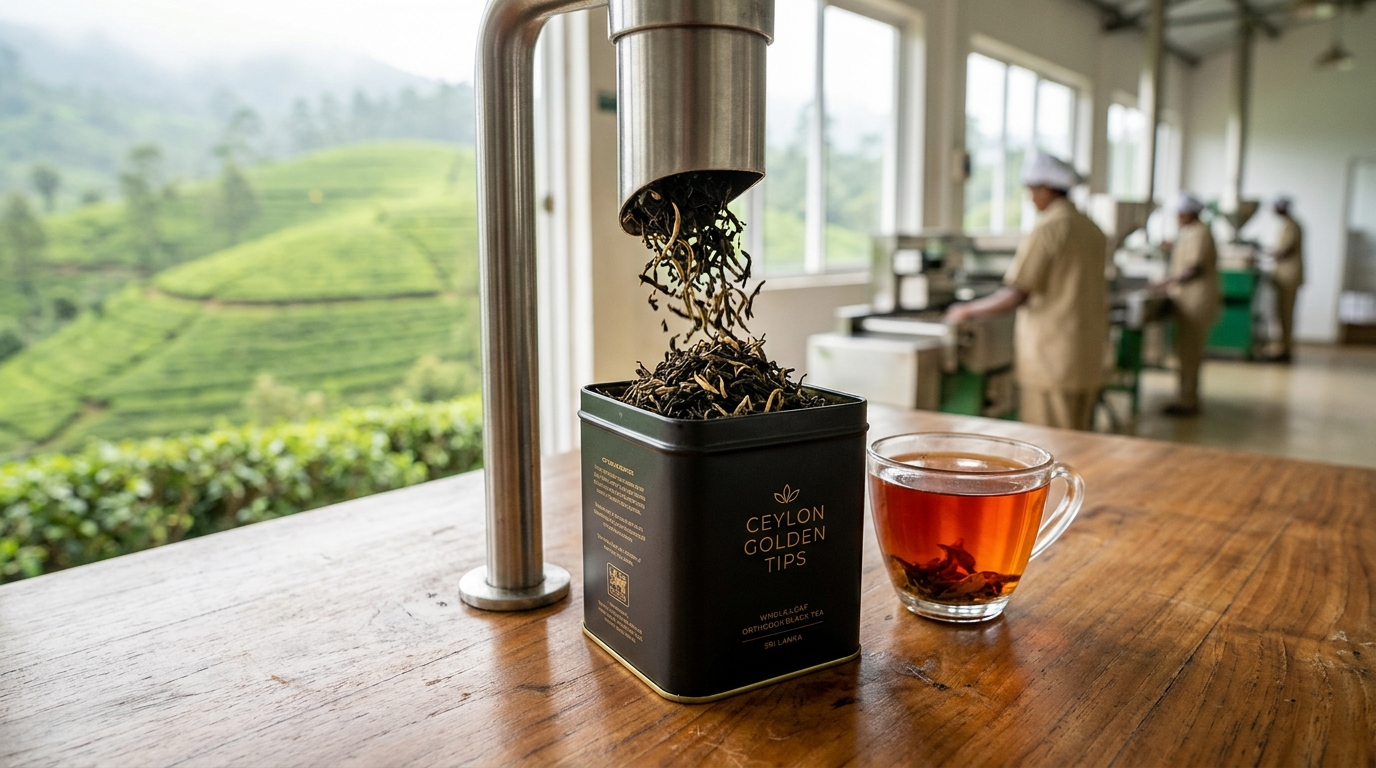
Packed in Sri Lanka: Why Fresh Retail Packaging at Source Is the Future of Tea
The global tea industry is currently navigating a pivot of historic proportions. For decades, the dominant economic model for tea was defined by the movement of massive, bulk-commodity volumes. Raw, loose-leaf tea was shipped in jute sacks or large shipping containers from origin countries to destination hubs, where it was blended, packaged, and branded. Today, that model is being challenged by a more efficient, quality-focused paradigm: value-added packaging at the source.
In 2023, the global tea market faced significant inflationary pressures and rising logistics costs, forcing importers and brand owners to rethink their supply chains. The data is clear: the countries that move beyond raw commodity exports to provide finished, retail-ready products are capturing a larger share of the value chain. For Sri Lanka, the shift toward packing tea in tins, pouches, and premium pyramid bags before it leaves the island is not just a trend—it is a strategic evolution.
1. Current Global Demand & Export Volume Dynamics
Global demand for tea remains resilient, but the composition of that demand is changing. Discerning consumers are increasingly interested in the "story" behind their cup. They want to know the elevation, the estate, and, most importantly, the freshness of their tea.
Export volumes from Sri Lanka have historically leaned toward bulk, but the growth trajectories for value-added exports—specifically tea packed in retail-ready formats—are outpacing raw leaf exports. Markets in the Middle East, the Russian Federation, and parts of Europe and North America are showing a growing preference for "Ceylon-packed" products. This shift is driven by a desire for authenticity. When a consumer buys a tin of tea labeled "Packed in Sri Lanka," they are receiving a product that has been handled by experts in the very climate where the tea was grown.
2. Auction Price Trends & Price Discovery Across Tiers
The Colombo Auction remains the heartbeat of the industry, providing a transparent price discovery mechanism that is the envy of many other agricultural commodities. Prices at the auction are tiered by quality, elevation, and method of manufacture.
In recent quarters, we have observed a distinct "quality premium." Teas that exhibit high-altitude character—such as those from Nuwara Eliya or Dimbula—are fetching record prices when they are processed and packaged with high-grade standards. Buyers are increasingly willing to pay more for tea that arrives in a finished state, as it eliminates the risks associated with third-party blending and storage in intermediate warehouses. This price stability is a cornerstone of the industry's long-term viability.
3. Supply Shocks, Climatic Impact & Production Volumes
The production of Ceylon black tea is inherently linked to the delicate ecosystems of the central highlands. Weather patterns, specifically the timing of the monsoon rains and the prevalence of mountain mist, dictate the annual output.
Recent years have seen supply shocks driven by irregular weather events and shifts in global fertilizer access. These challenges have forced estate managers to focus on "quality over quantity." By maximizing the value of every kilogram produced, the industry can better support the workforce and the land. When tea is packaged at the source, it is protected from the degradation that often occurs during long, humid ocean voyages in bulk containers. This ensures that the delicate floral notes and the brisk, bright character of the tea remain intact from the factory floor to the consumer’s kitchen.
4. Emerging Destination Markets & Retail Channel Growth
While traditional markets remain vital, new consumption hubs are emerging. E-commerce has bridged the gap between the Sri Lankan tea gardens and the global consumer. A boutique brand in London or a specialty tea shop in New York can now source directly from a Sri Lankan producer who handles the packaging.
This retail channel growth is fueled by the rise of the "prosumer"—a consumer who is highly informed about the botanical science and the history of their beverage. These buyers prioritize brands that offer transparency. Packaging at the source allows for precise labeling of the tea grades and origin, providing a level of traceability that bulk blending simply cannot match.
5. Value Addition at Source: The Move from Bulk to Consumer Packs
The transition from bulk shipping to retail-ready packaging is the most significant economic development in the Ceylon tea trade.
The Economics of Value Addition
When tea is shipped in bulk, the value is captured by the entity that does the final blending and packaging in the destination country. By performing these tasks in Sri Lanka, the country retains the economic value associated with manufacturing, design, and quality control. This creates high-value jobs for the local population and keeps the intellectual property of the "Ceylon Tea" brand within its home.
Preservation of Quality
Tea is a hygroscopic product, meaning it absorbs moisture and odors from the environment. Bulk shipping creates multiple opportunities for the tea to be exposed to air, fluctuating temperatures, and contaminants. Packing at the source allows for the use of advanced, food-grade materials and oxygen-barrier technology. Whether it is a classic tin or a modern pyramid bag, the tea is sealed in a controlled environment, ensuring the consumer experiences the tea as the master tea-taster intended.
Value Creation Pathway: From Production to Retail
1. Primary Harvest & Production
Producers craft raw product, absorbing farm-gate operational and labor costs
2. Centralized Auction / Discovery
Licensed brokers catalog and test lots, selling through transparent competitive bidding
3. Value Addition & Packaging
Processors clean, blend, and seal products into finished retail formats under quality standards
4. Global Logistics & Delivery
Temperature-monitored container vessels transport goods to international distributors
6. Strategic Sourcing Outlook: Projections for the Coming Year
For procurement directors and brand owners, the strategy for the coming year is clear: prioritize direct-from-origin partnerships. The days of relying on anonymous bulk blends are waning as consumers demand more accountability.
Market Trends & Trade Data Table
| Market Region / Product Tier | Export Volume (Metric Tons) | Average Price Trend ($/kg) | Primary Growth Drivers |
|---|---|---|---|
| Premium Retail Tins | 15,000 | Rising | Quality/Storytelling |
| Specialty Pyramid Bags | 8,500 | Stable/High | Convenience/Design |
| Bulk Commodity (Export) | 220,000 | Volatile | Industrial Demand |
| High-Elevation Single Estate | 5,000 | Premium | Traceability/Terroir |
As we look ahead, expect to see an increase in "estate-to-shelf" models. This approach not only ensures the highest quality but also supports the long-term sustainability of the traditional manufacturing process. By investing in packaging technology at the source, Sri Lanka is securing its future as the premier supplier of high-quality tea to the world.
Frequently Asked Questions About Market Trends
1. Why is packaging tea at the source better for freshness? Packaging at the source minimizes the time between manufacturing and sealing. This locks in the volatile aromatic compounds and antioxidants, preventing degradation caused by long-distance bulk shipping.
2. How does source packaging support local Sri Lankan communities? By shifting from bulk commodity exports to finished consumer goods, Sri Lanka retains more value domestically. This creates high-skilled jobs in printing, design, and quality assurance.
3. Does shipping finished tea packs increase carbon footprints? Not necessarily. Shipping finished goods is more space-efficient than traditional loose-bulk methods. Furthermore, it eliminates the need for secondary repackaging in destination countries, reducing overall energy consumption.
4. What are the main quality advantages of pyramid bags packed in Sri Lanka? Pyramid bags allow whole or large-leaf tea more room to expand, providing a better infusion. When packed at the source, these bags remain in an oxygen-free, controlled environment until they reach the consumer.
5. Is value-added packaging a growing trend for Ceylon tea? Yes, Sri Lankan exporters are increasingly moving away from bulk dependency. This strategic shift is driven by global demand for premium, traceable, and single-origin products.
Conclusion
The future of the tea industry is not defined by the mass movement of raw materials, but by the precision and care applied at the point of origin. By embracing retail-ready packaging at the source, Sri Lanka is not only preserving the integrity of its world-renowned product but also ensuring that the economic benefits of the tea trade are felt where they matter most: in the gardens and the communities of the central highlands.
For the informed consumer and the strategic buyer, the label "Packed in Sri Lanka" has become a hallmark of quality, freshness, and ethical sourcing. As you explore the various types of Ceylon tea available, look for those that have been packaged at the source. You will taste the difference that altitude, care, and immediate sealing make in every cup. We invite you to continue your exploration of this remarkable industry by learning more about our manufacturing standards or by visiting our exporters directory to connect with those leading this exciting evolution in the global tea trade.