
Ruhuna and Sabaragamuwa: Why Sri Lanka's Low-Country Teas Taste So Bold and Sweet
In the southern and western reaches of Sri Lanka, the air is thick, warm, and heavy with the scent of damp earth and tropical flora. Here, far below the famous mist-covered peaks of the central highlands, lie the tea gardens of Ruhuna and Sabaragamuwa. This is the realm of the "low-country" tea—a landscape where the tea bush thrives in a climate vastly different from the cooler, high-altitude estates.
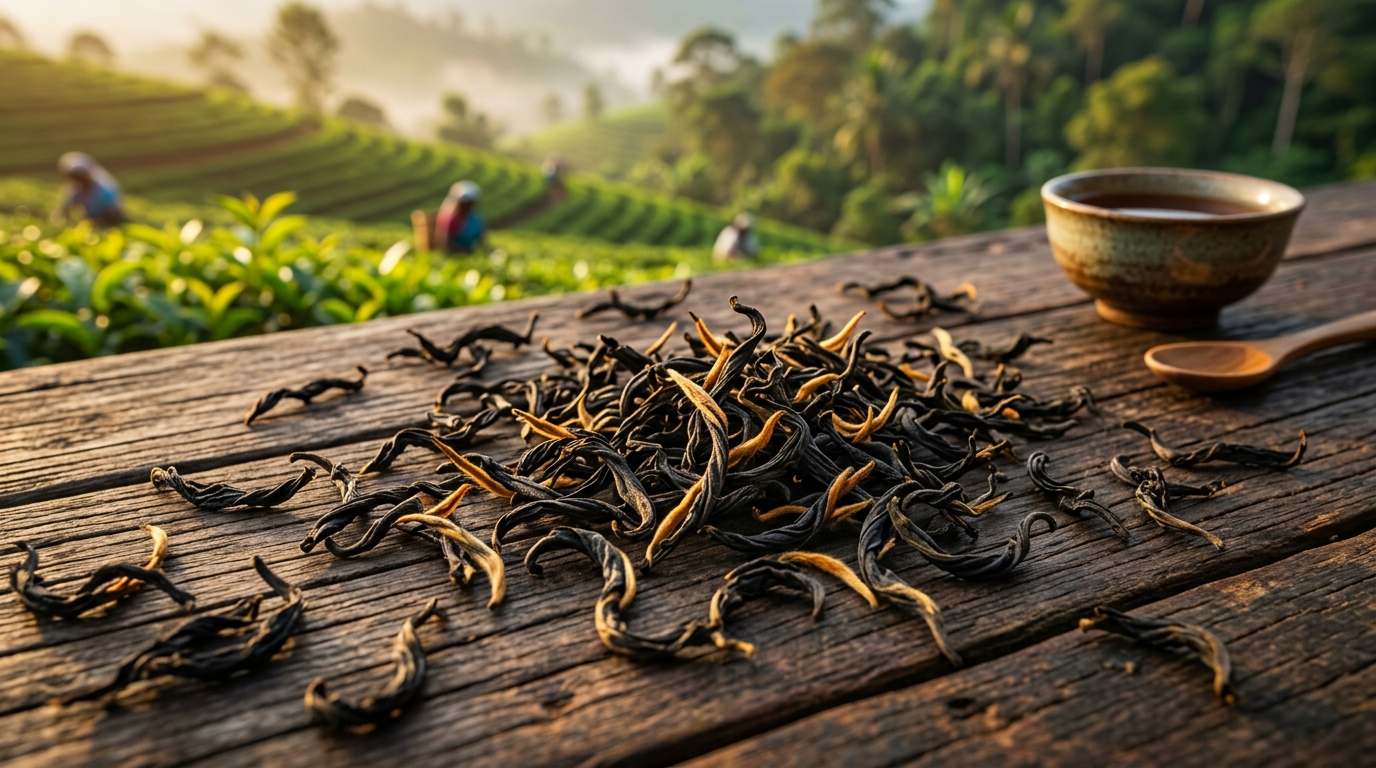
Unlike the delicate, floral teas that define the high-grown regions, the tea produced in these lowlands is a powerhouse of flavor. It is dark, bold, and unapologetically sweet. The leaves, often expertly twisted and wiry, yield a deep, mahogany-colored liquor that commands attention. For those who seek a cup with body, strength, and a lingering honeyed finish, the low-country regions offer a sensory experience that is entirely their own.
Geographic Geography, Topography and Elevation
Ruhuna and Sabaragamuwa occupy the southern and southwestern plains of Sri Lanka. While "low-country" suggests flat land, these regions are actually characterized by rolling hills, hidden valleys, and a geography defined by proximity to the island’s southern coastline and the lush, rainforest-covered foothills of the central massif.
Elevation here rarely exceeds 2,000 feet above sea level. This lower altitude is the defining feature of the terroir. Because the tea bushes do not have to struggle against the thinning air or the biting cold of the highlands, they grow at an accelerated pace. The plant focuses its energy on rapid leaf production, resulting in a larger, more succulent leaf. This physical difference in the leaf structure is the foundation of the bold, robust character that defines these regions.
Seasonal Monsoons, Rain Shadow and Sun Exposure
The climate of the low country is defined by the heavy, life-giving rains of the monsoon seasons. The southwest monsoon, in particular, brings moisture from the Indian Ocean, saturating the soil and keeping the humidity levels consistently high. This is not a climate of rest; it is a climate of constant, vigorous growth.
The interaction between the heat and the constant moisture creates a unique environment for the tea plant. The sun exposure in these regions is intense, which stimulates the production of specific chemical compounds within the leaf. This warmth, combined with the high humidity, ensures that the tea bushes are rarely dormant. This allows for frequent plucking rounds, ensuring that the tea reaching the factory is always fresh and full of vitality.
Soil Composition and Mineral Signatures
The soil in Ruhuna and Sabaragamuwa is rich, red, and fertile. It is often deep-lateritic soil, which is naturally acidic and drains exceptionally well—a critical factor for tea, which hates "wet feet." As the tropical forest floor sheds its foliage, this organic matter decomposes rapidly in the heat, returning essential nutrients back into the soil.
This mineral-rich foundation imparts a distinct signature to the tea. The roots of the tea bushes draw up elements from the deep, weathered rock layers, which contribute to the "body" or mouthfeel of the final brew. When you taste a high-quality tea from these regions, you are essentially tasting the result of a long, chemical dialogue between the tropical sun, the monsoon rains, and the ancient, nutrient-dense earth of southern Sri Lanka.
Iconic Growing Estates and Traditional Producers
The estates of Ruhuna and Sabaragamuwa are often smaller and more intimate than the sprawling plantations of the central highlands. Many are family-owned or managed by dedicated growers who have lived in these valleys for generations. These producers have mastered the art of "low-country processing," which is distinctly different from the methods used in higher regions.
Because the leaves are larger and more succulent, the processing requires a deft hand. The withering process is carefully monitored to ensure the leaf reaches the perfect level of suppleness before rolling. The subsequent oxidation is often taken further than in high-grown teas, which contributes to the signature dark, rich color of the leaf and the depth of the cup. Exploring the history of Ceylon tea reveals how these regions evolved to become the backbone of Sri Lanka’s export economy, consistently producing the boldest grades that satisfy global demand for a robust morning cup.
The Regional Sensory Profile: Cup Character and Tasting Notes
To drink a tea from Ruhuna or Sabaragamuwa is to embrace intensity. The liquor is typically a deep, bright reddish-brown, often described as having a "coppery" glow. On the palate, these teas are full-bodied and round. They lack the sharp astringency of some high-grown varieties, replacing that bite with a smooth, velvety texture.
The signature flavor note is undoubtedly sweetness—not the sweetness of sugar, but the complex, molasses-like, or honeyed sweetness that comes from high-quality, fully oxidized black tea. Some tasters also detect hints of dried fruit, cocoa, or even a subtle, smoky undertone. It is a tea that stands up to milk perfectly, as its bold flavor profile is not easily masked. It is the quintessential "breakfast tea" for those who want to feel the energy of the tropics in their cup.
How Terroir Influences Quality Seasons
The journey from the bush to the cup is shaped by the environment. Understanding these stages reveals why the flavor profile remains so consistent:
- Weather Transition: As the seasonal winds shift, the humidity levels fluctuate, forcing the tea plant to adapt its metabolic rate, which changes the chemical composition of the new shoots.
- Warm Tropical Air: Unlike high-mountain cold, the consistent warmth of the low country encourages the rapid development of amino acids, which are responsible for the tea's natural sweetness and savory depth.
- Peak Hand-Harvesting: Specialized plucking teams focus on the 'two leaves and a bud' standard, ensuring that only the most flavorful, succulent parts of the plant are selected for the factory.
- Micro-Batch Processing: Because the harvest is frequent, processing is done in smaller, controlled batches, allowing the tea maker to adjust oxidation times to perfectly match the daily characteristics of the leaf.
Regional Terroir Comparison Table
The following table highlights the subtle differences across the low-country landscape, where micro-climates create distinct variations in the cup.
| Sub-Region / Valley | Elevation Range | Peak Harvest Months | Color & Appearance | Signature Flavor Notes |
|---|---|---|---|---|
| Southern Ruhuna | 0–1,000 ft | Year-round | Deep dark brown | Intense, malty, honey |
| Sabaragamuwa Valley | 500–2,000 ft | March–April | Dark, coppery red | Fruity, caramel, full-body |
| Ratnapura District | 200–1,500 ft | Oct–Nov | Deep mahogany | Rich, cocoa, sweet finish |
| Deniyaya Foothills | 1,000–2,000 ft | Jan–Feb | Bright amber | Floral notes, smooth body |
Frequently Asked Questions About Regional Terroir
Why does low-country tea taste sweeter than high-grown tea?
The accelerated growth cycle in the warm lowlands allows the tea bush to synthesize different ratios of polyphenols and amino acids compared to high-grown bushes. This results in a fuller body and a natural, honeyed sweetness that is less "bright" or "grassy" than high-altitude tea.
Is Ruhuna tea considered a 'strong' tea?
Yes, Ruhuna is renowned for its strength. It produces one of the deepest, darkest liquors in the world of Ceylon tea. It is a favorite among those who enjoy a bold, robust cup that pairs well with milk and sugar.
How does the rainfall in Sabaragamuwa affect the tea?
The high rainfall in this region ensures the soil remains moist and the atmosphere remains humid. This constant water availability prevents the plant from experiencing the "drought stress" that often creates sharp, bitter notes, leading instead to a consistently smooth and rounded flavor profile.
What is the best way to brew these bold teas?
Use freshly boiled water (around 95°C to 100°C) and a shorter steep time of about 3 minutes. Because these teas have such a high concentration of flavor, they can become overly intense if left to steep too long.
Do these regions produce only black tea?
While black tea is the primary output due to the demand for its bold characteristics, these regions have the capacity to produce various types of Ceylon tea. However, the terroir is most famous for its exceptional, full-bodied black tea grades, which are the benchmark for the industry.
Can I drink these teas without milk?
Absolutely. While they are excellent with milk, the high-quality leaves from these regions offer a complex, honeyed, and fruity flavor profile that can be fully appreciated when enjoyed black, provided the brewing time is kept precise to avoid over-extraction.
Conclusion
The low-country teas of Ruhuna and Sabaragamuwa offer a masterclass in how environment dictates taste. By moving away from the high mountains and into the warm, verdant valleys of southern Sri Lanka, we find a tea that is bold, sweet, and deeply satisfying. These regions do not rely on the delicate, fleeting aromatics of the high altitudes; instead, they provide a reliable, robust, and honeyed cup that speaks of the rich soil and tropical sun.
Whether you are a seasoned tea enthusiast or just beginning to explore the diverse regions of Ceylon, these low-country teas provide a essential anchor in your collection. They are the perfect reminder that the most profound flavors often come from the most vibrant, sun-drenched places on earth. We invite you to explore our exporters directory to source these exceptional teas directly from the gardens where they are crafted with such distinct, regional pride.