
Single-Estate vs Blended Ceylon Tea: Which Offers the Truest Flavor?
When you walk down an aisle of premium teas or browse an online catalog, you are often faced with a subtle but significant choice: do you choose a tea from a specific, named garden, or do you select a classic, masterfully crafted blend? For many, this decision feels like a gamble. You might wonder if the high price of a single-estate tea is truly worth it, or if a blend sacrifices the "soul" of the tea for the sake of uniformity.
The truth is that neither is inherently "better." Instead, they serve two different purposes in the world of Ceylon black tea. One is a snapshot of a specific time and place, while the other is a carefully engineered masterpiece of balance. To understand which offers the "truest" flavor, we must step past the marketing and into the manufacturing process that defines both.
1. Quick Head-to-Head Overview: The Core Differences at a Glance
If you are looking for a quick breakdown, think of the difference like comparing a single-vineyard wine to a high-end vintage blend.
- Single-Estate Tea: Think of this as the "terroir" choice. It captures the unique micro-climate, altitude, and soil composition of one specific location. It is seasonal, often limited in quantity, and provides a pure, unadulterated taste profile.
- Blended Tea: This is the "consistency" choice. Master blenders combine various grades and origins to ensure that every cup—whether you brew it in January or July—tastes exactly the way the brand intends.
| Feature / Criteria | Single-Estate | Blended Tea | Winner / Recommendation |
|---|---|---|---|
| Consistency | Highly variable by season | Uniform and reliable | Blended for daily habits |
| Flavor Profile | Intense, niche, specific | Balanced, rounded, complex | Single-Estate for curiosity |
| Craftsmanship | Garden-specific technique | Master blender's expertise | Blended for technical skill |
| Caffeine Level | Varies by flush/altitude | Standardized by grade | Blended for predictability |
| Ideal Time | Afternoon reflection | Morning/Daily ritual | Depends on your mood |
2. Manufacturing & Craftsmanship Face-Off
The journey from leaf to cup begins in the botanical science of the tea plant, but it is in the factory where the paths of single-estate and blended teas diverge.
The Single-Estate Philosophy
Single-estate tea is the result of a specific garden's environment. The manufacturing process here is focused on preserving the nuances of that exact hillside. When you drink a tea from Nuwara Eliya, you are tasting the thin mountain air, the specific rainfall, and the mineral-rich soil of that region. The tea maker’s job is to act as a guardian of this identity, ensuring the leaves are withered, rolled, and oxidized to highlight the garden's signature notes.
The Art of the Master Blender
Blending is not about "hiding" inferior tea; it is about architectural design. A master blender at a Ceylon tea exporter samples thousands of lots from the Colombo Auction. They look for specific attributes—a bright, brisk liquor from Dimbula, perhaps, mixed with a malty, full-bodied leaf from Uva. By combining these, they create a "house style" that is greater than the sum of its parts. It is a calculated, artistic endeavor to achieve perfection in every pour.
3. Sensory Showdown: Color, Aroma & Flavor Compared Side by Side
When you pour the liquor into a cup, the sensory experience reveals the structural differences between these two approaches.
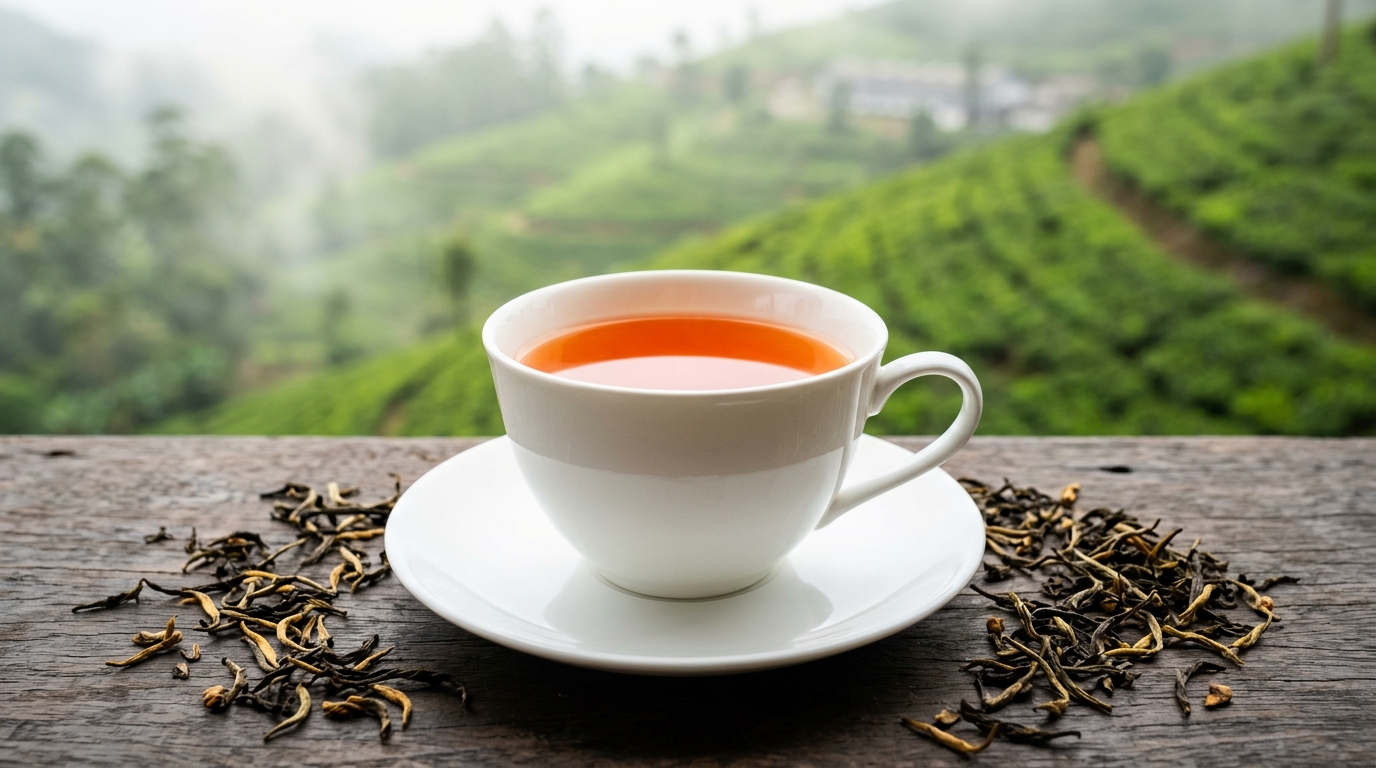
Single-Estate Sensations: Expect a focused, often high-pitched aromatic profile. If you are drinking a high-grown tea, you might notice floral, citrusy, or even delicate honeyed notes. The appearance is often a brilliant, clear, and glowing amber. Because it is unblended, the flavor can be "sharp"—it is a direct hit of the garden’s personality. It is an intellectual experience, demanding your full attention.
Blended Sensations: A high-quality blend is designed to be "rounded." The sharp edges of a single-origin tea are softened by the inclusion of complementary leaves. You will find that the aroma is often deeper, more layered, and more comforting. The texture is usually smoother on the palate, with a finish that feels complete and satisfying. It is a sensory experience designed for enjoyment, not necessarily for deep analysis.
Quick Decision Framework: Which Option Is Right for You?
4. Functional Properties, Health Benefits & Caffeine Levels
Both single-estate and blended Ceylon teas are packed with natural antioxidants and polyphenols. However, the distribution of these benefits varies.
- The Single-Estate Profile: Because these teas are often plucked during specific flushes (the timing of the harvest), they can contain higher concentrations of specific amino acids or catechins based on the weather conditions of that season. It is a seasonal health product.
- The Blended Profile: Blends offer a "standardized" nutritional profile. Because blenders mix various lots, the variance in caffeine and antioxidant levels is smoothed out. If you are sensitive to caffeine, a consistent blend allows you to know exactly how your body will react to your morning cup every single day.
5. Preparation, Brewing & Serving Recommendations
To truly appreciate the "truest" flavor, your brewing technique must match the tea's intent.
- Brewing Single-Estate: These teas are fragile. Use fresh, filtered water heated to roughly 90–95°C. Avoid over-steeping; three minutes is often the sweet spot. These are best enjoyed plain, perhaps with a small piece of dark chocolate or a light biscuit that won't overwhelm the delicate floral notes.
- Brewing Blended Tea: These are the workhorses of the tea world. They handle boiling water (100°C) with ease and are more forgiving if you leave the leaves in the pot for an extra minute. Blends are the perfect candidates for adding a dash of milk or a slice of lemon, as their robust profiles can stand up to additions without losing their core character.
6. The Final Verdict: Which One Should You Choose?
So, which offers the "truest" flavor? If your goal is to understand the geography of Sri Lanka, to taste the difference between the mist-covered peaks of Kandy and the windswept plains of Uva, then the single-estate tea is your answer. It is the truest expression of the land.
However, if your goal is to have the perfect, reliable, and deeply comforting cup of tea that starts your day with consistency and grace, the masterfully crafted blend is the truest expression of the tea maker's craft.
Ultimately, the best tea is the one that fits your ritual. Start your morning with a reliable, bold blend, and save the single-estate experience for those quiet moments when you want to travel to the mountains of Sri Lanka from the comfort of your own home.
Frequently Asked Questions Comparing These Options
What does "single-estate" actually mean on a tea label? It means the tea leaves were harvested and processed at one specific tea garden or estate, rather than being a mix of leaves from various plantations across a region.
Do blends contain lower quality tea leaves? Absolutely not. In fact, many master blenders use exceptionally high-quality leaves from multiple regions to create a profile that is more complex than any single estate could produce on its own.
Why does the flavor of my favorite single-estate tea change every year? Because tea is an agricultural product, the climate—rainfall, sunlight, and temperature—changes from year to year. Single-estate teas are a direct reflection of these seasonal shifts.
Can I use milk with single-estate Ceylon tea? While you can, it is generally discouraged for delicate, high-grown single-estate teas, as the milk masks the nuanced, floral, and subtle flavors that make the tea special.
How should I store both types of tea to keep them fresh? Regardless of whether it is a blend or single-estate, store your tea in an airtight container, away from direct sunlight, moisture, and strong odors like spices or coffee.
Which is better for beginners? Blends are often more approachable for beginners because they provide a familiar, balanced, and consistent flavor profile that is less likely to be "challenging" to the palate.
Does price always indicate quality? Not always. While single-estate teas are often more expensive due to their limited nature and exclusivity, a well-crafted, high-grade blend can often provide a superior drinking experience for a more accessible price point.