
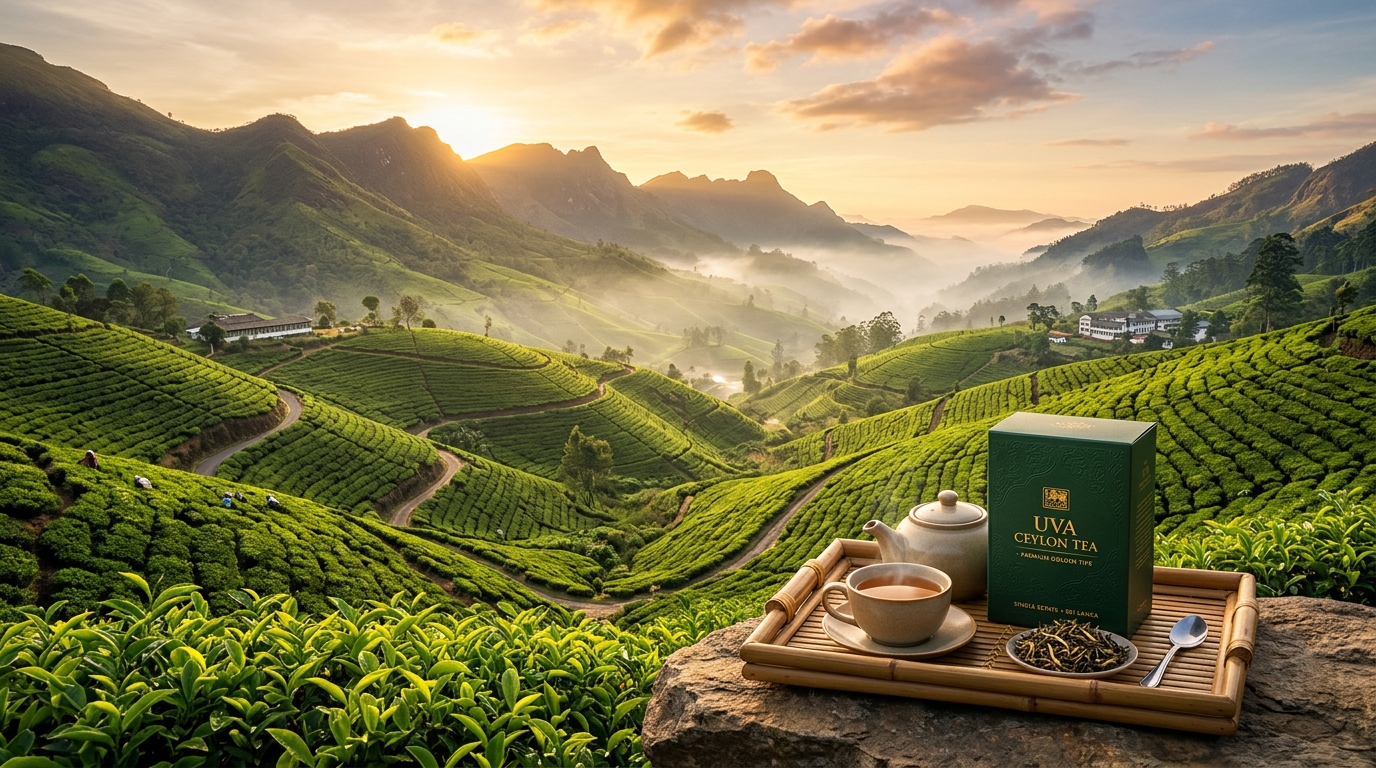
The Famous Dry Winds of Uva: The Secret Behind the Wintergreen Tea Harvest
High above the central plains of Sri Lanka, the Uva province stands as a testament to the power of climate over chemistry. Here, the landscape is not merely a collection of mountains and valleys; it is a giant, natural laboratory. While many tea-growing regions around the world rely on steady, predictable rainfall, Uva’s identity is forged in the breath of the mountains.
Twice a year, the winds shift. As they sweep across the high ridges and plunge into the deep, sheltered valleys, they undergo a transformation. These are the famous dry winds of Uva. They are the invisible artisans of the tea industry, responsible for a sensory profile so distinct—often described as minty, herbal, and wintergreen—that it remains one of the most coveted experiences for any true tea enthusiast. Understanding this region requires looking past the leaf and into the very air that surrounds it.
1. Geographic Geography, Topography & Elevation
The Uva district is a rugged, breathtaking expanse located on the eastern slopes of Sri Lanka’s central massif. Unlike the western hills, which bear the brunt of the heavy southwestern monsoon, Uva sits in a unique position. It is protected by the high peaks of the central highlands, yet it remains exposed to the winds that roar through the mountain passes.
The elevation here is significant, typically ranging from 3,000 to 5,000 feet above sea level. The topography is a complex grid of steep ridges and deep valleys. This verticality creates a series of microclimates where every slope, depending on its aspect, interacts differently with the sun and the wind. The soil, often rich in iron and possessing excellent drainage, acts as the final component of a terroir that is as challenging as it is rewarding. It is a place where the tea bushes must fight for survival, and in doing so, they produce a leaf of exceptional character.
2. Seasonal Monsoons, Rain Shadow & Sun Exposure
The secret to Uva’s "wintergreen" quality lies in the rhythm of the monsoons. Sri Lanka experiences two primary monsoon seasons, but Uva lives in the shadow of the western ranges. During the southwestern monsoon, the western hills receive heavy, constant rain. By the time these air currents crest the mountains and reach Uva, they have lost much of their moisture.
What remains is a cool, dry, and persistent wind. This is the phenomenon of the rain shadow. From July to September, and again in the early months of the year, these winds scour the tea estates. The tea plants, sensing the lack of humidity and the drop in temperature, naturally slow their growth. This is the "quality season."
As the plant growth slows, the concentration of chemical compounds within the leaf increases. The plant diverts its energy from rapid leaf production to the development of complex aromatic oils and polyphenols. It is a form of natural stress that, when managed by the expert hands of a tea maker, results in a cup that is bright, brisk, and uniquely minty.
3. Soil Composition & Mineral Signatures
The soil of Uva is as distinct as its weather. Much of the region is characterized by reddish-brown, iron-rich earth. This soil type, known locally for its ability to hold nutrients while allowing for rapid water drainage, is essential for the tea plant's health during the dry, windy seasons.
Because the wind keeps the surface of the soil relatively dry, the tea roots must reach deeper into the mineral-rich substrate to find moisture. This deep-rooting process imparts a specific mineral signature to the leaf. While the wind provides the aromatic top-notes of mint and wintergreen, the soil provides the structural backbone of the tea—the body, the astringency, and the lingering finish that separates a high-quality Uva tea from a generic brew. The synergy between the wind-stressed leaf and the mineral-rich soil creates a balance that is impossible to replicate in more humid, lowland environments.
4. Iconic Growing Estates & Traditional Producers
The history of tea in Uva is tied to the pioneering spirit of the 19th century. Estates such as Aislaby, Glenanore, and St. James are more than just names on a map; they are institutions that have spent over a century mastering the art of the Uva season.
These estates are managed by families and teams who have developed an almost intuitive understanding of the winds. They know exactly when the wind speed is optimal and how to adjust their factory rollers to ensure the leaf is withered just enough to capture the aromatic oils without damaging the delicate cellular structure. The legacy of these producers is the preservation of the traditional manufacturing process, ensuring that the seasonal character of the tea remains the focus of every batch.
5. The Regional Sensory Profile: Cup Character & Tasting Notes
When you brew a cup of high-grown Uva tea, the experience is immediate. The liquor is typically a bright, clear copper color. The first thing you notice is the aroma—a sharp, refreshing scent that reminds many of fresh mountain air or crushed mint leaves.
On the palate, this is followed by a distinct briskness. It is not the heavy astringency of a lowland tea, but a sharp, clean snap that wakes up the senses. The finish is long and smooth, often with a lingering sweetness that balances the initial "wintergreen" intensity. It is a complex, multi-layered tea that demands attention. It is not a tea meant to be hidden behind milk or sugar, but one that rewards the drinker who takes the time to appreciate its nuances.
Understanding How Terroir Influences Quality Seasons
The journey from a windswept mountain slope to your teacup is a precise, natural process.
- Weather Transition: The seasonal monsoon shifts create a rain shadow effect, significantly reducing humidity across the Uva mountain ridges.
- Cold Mountain Air: Persistent, cool winds gently stress the tea plants, forcing them to concentrate essential aromatic oils and flavor precursors.
- Peak Hand-Harvesting: Specialized tea pluckers target the young, tender shoots at the exact moment the plant reaches its peak of aromatic maturity.
- Micro-Batch Processing: Experienced tea makers adjust the withering and rolling stages to celebrate the unique, seasonal, and minty character of the harvest.
Regional Terroir Comparison Table
The Uva district is not a monolith; different valleys offer different expressions of the tea plant.
| Sub-Region / Valley | Elevation Range | Peak Harvest Months | Color & Appearance | Signature Flavor Notes |
|---|---|---|---|---|
| Uva High | 4,500–5,000 ft | July–August | Bright Copper | Sharp Mint, High Briskness |
| Uva Mid | 3,500–4,500 ft | August–September | Golden Amber | Honeyed, Floral, Wintergreen |
| Uva Low | 3,000–3,500 ft | September–October | Deep Reddish | Malt, Earthy, Rich Body |
| Welimada Valley | 3,500–4,000 ft | July–September | Vibrant Orange | Citrus, Sharp Herbaceous |
Frequently Asked Questions About Regional Terroir
What makes Uva tea different from other Ceylon teas?
Uva tea is defined by its unique "Uva character," a sharp, exotic, and often minty or wintergreen aroma caused by the high-altitude dry winds during the quality season. This is a regional specialty not found in the same intensity in other Ceylon tea regions.
When is the best time to experience Uva's quality season?
The peak quality season for Uva occurs during the dry months of July through September, when the winds are strongest and the tea plants are stressed for flavor. This is when the most aromatic, high-value leaves are plucked.
Why do dry winds impact tea flavor?
When the tea plant experiences water stress from dry, cool winds, it slows its growth and concentrates secondary metabolites. These compounds are the precursors for the complex aromatic oils that give Uva tea its legendary minty profile.
Does the Uva region produce only black tea?
While Uva is globally renowned for its brisk black teas, the craftsmanship in the region allows for diverse processing styles. However, the traditional black tea process remains the gold standard for capturing the region's specific terroir.
How should I brew Uva tea to taste the wintergreen notes?
Use freshly boiled water and a shorter steep time, around three minutes. This ensures the volatile aromatic oils are captured in the cup rather than lost to over-extraction. Always use high-quality, filtered water to allow the delicate flavors to shine.
Is Uva tea considered a seasonal tea?
Yes, Uva is one of the few regions where the seasonal variation is so pronounced that it dictates the market value and the sensory profile. Buyers and connoisseurs eagerly anticipate the "Uva Season" as a highlight of the Ceylon tea calendar.
The Legacy of the Wind
The story of Uva is a story of harmony between nature and human endeavor. It is a reminder that the finest things in life are often the result of variables we cannot control—the direction of the wind, the slope of a hill, and the timing of a season. By honoring these natural rhythms, the producers of Uva continue to offer the world a tea that is truly one of a kind.
When you hold a cup of Uva tea, you are holding the essence of those dry, mountain winds. It is a refreshing, invigorating, and deeply authentic experience that connects you to the rugged beauty of the Sri Lankan highlands. To further your exploration of these distinct profiles, we invite you to discover the history of Ceylon tea or browse our complete regional guide to see how Uva compares to the other great growing districts of the island.