
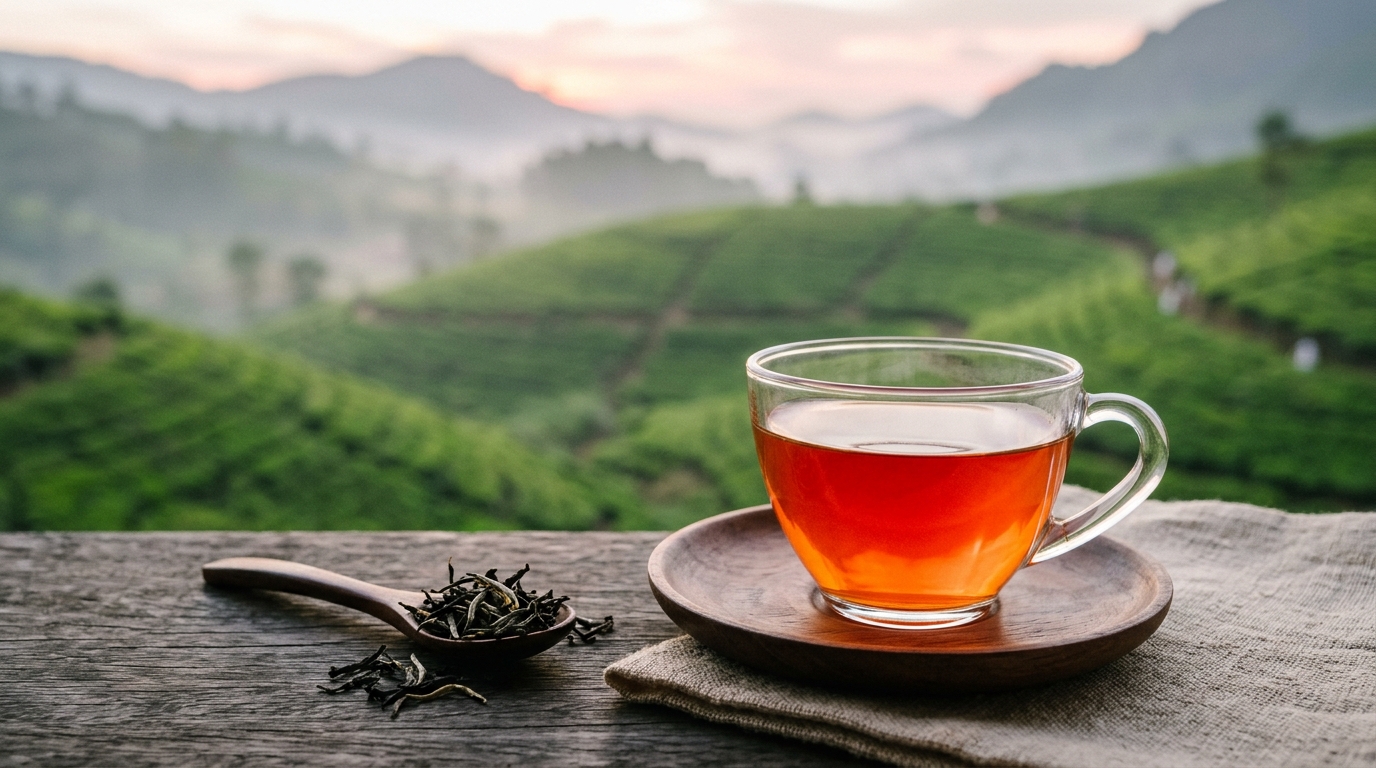
Uda Pussellawa Ceylon Tea: The Hidden Mountain Valley with a Delicate Pink Cup
Tucked away in the narrow, rugged ridges between the bustling town of Kandy and the cool, high-altitude sanctuary of Nuwara Eliya lies a secret of the tea world. This is the valley of Uda Pussellawa. Often overshadowed by its more famous neighbors, this region possesses a unique atmospheric character that rewards the patient drinker with one of the most elegant cups in the entire Ceylon tea portfolio.
The magic of Uda Pussellawa is found in its geography. It is a land defined by steep slopes, narrow valleys, and a climate that refuses to be ignored. While other regions might experience a single, predictable growing season, Uda Pussellawa is caught in a climatic tug-of-war. It receives the brunt of two distinct monsoons, creating a microclimate that forces the tea bush to grow slowly and develop a flavor profile that is both crisp and surprisingly delicate.
For the informed enthusiast, this region represents the pinnacle of terroir-driven agriculture. It is not merely about the variety of the plant, but about how the cool mountain air, the specific mineral content of the soil, and the seasonal rainfall combine to produce a liquor that is often described as having a "rosy" quality—a rare and prized trait in the world of Ceylon black tea.
Geographic Geography, Topography & Elevation
Uda Pussellawa sits at a fascinating intersection of the central highlands. Geographically, it is nestled to the east of the Nuwara Eliya range and north of the Uva province. Because it is sheltered by high mountain walls, it acts as a funnel for the winds that sweep across the island.
The elevation here typically ranges between 3,000 and 5,000 feet above sea level. This high altitude is crucial. At these heights, the air is consistently thinner and cooler, which slows the metabolism of the tea plant. When a plant grows slowly, it has more time to synthesize complex aromatic compounds. The steepness of the terrain also ensures excellent drainage, which prevents the roots from becoming waterlogged during the heavy rains, keeping the plant healthy and focused on producing high-quality tender fresh leaves.
The valley floor is narrow, which means the tea estates are carved into dramatic terraces that climb toward the clouds. These slopes face different aspects, meaning some estates receive the full force of the morning sun, while others are shaded by the peaks for much of the afternoon. This variation creates a patchwork of micro-terroirs, allowing for a surprising diversity of character even within a relatively small geographic footprint.
Seasonal Monsoons, Rain Shadow & Sun Exposure
To understand the character of this tea, one must understand the rhythm of the rains. Uda Pussellawa is unique because it is influenced by both the Northeast and Southwest monsoons. This creates a complex cycle of humidity and dryness that is quite different from other Sri Lankan tea regions.
- The Seasonal Shift: As the monsoon winds transition, the valley experiences periods of intense mist followed by bright, clear, and cold days. This "cold shock" is essential for the tea plant.
- Concentrated Aromatic Oils: During the cooler periods, the plant concentrates its resources in the new shoots. This is when the bushes produce the most delicate, floral, and aromatic leaves.
- The Rain Shadow Effect: The surrounding mountain peaks often create a rain shadow. While one side of a ridge might be drenched, the other side remains in a dry, sunny pocket. This allows producers to harvest tea even when the rest of the island is experiencing heavy rainfall.
This specific dance between the monsoons and the sun is what gives the tea its signature rosy liquor. It is a testament to how the environment dictates the quality of the orthodox whole leaves.
Soil Composition & Mineral Signatures
The soil in Uda Pussellawa is deep, red, and rich in organic matter. Over centuries, the decomposition of mountain foliage has created a thick layer of humus that provides the tea bushes with a steady supply of nutrients.
However, the real secret lies in the geological foundation. The soil here is derived from weathered crystalline rock, which is rich in iron and other trace minerals. These minerals are absorbed by the tea roots and play a significant role in the final flavor of the cup. The drainage dynamics are also perfect; the porous nature of the soil ensures that the plants receive enough moisture to stay hydrated, but the steep slopes ensure that the water never stagnates.
This mineral profile, combined with the high altitude, creates a tea that is not overly heavy or earthy. Instead, it is characterized by a "clean" finish—a bright, crisp sensation on the palate that is the hallmark of high-grown, mineral-rich Ceylon tea.
Iconic Growing Estates & Traditional Producers
The history of tea in Uda Pussellawa is as rugged as the landscape itself. Many of the estates here were established during the colonial era, and they have since evolved into sophisticated operations that balance traditional manufacturing techniques with modern quality control.
Estates in this region are known for their dedication to the "orthodox" method. This involves careful hand-plucking of the bud and two leaves, followed by a slow, methodical withering and rolling process. Because the region is relatively small, these estates operate more like boutique farms than industrial plantations.
The master tea makers in Uda Pussellawa understand that their tea is delicate. They often adjust the drying and firing times to ensure that the subtle, rosy aromatic notes are preserved rather than roasted away. When you visit these estates, you are often struck by the silence—it is a place of mist, steep paths, and the constant, rhythmic sound of the rolling machines in the distance.
The Regional Sensory Profile: Cup Character & Tasting Notes
When you brew a cup of Uda Pussellawa tea, you are looking for a specific visual and sensory experience. The liquor should be bright and clear, with a distinct pinkish or rosy tint—rare for a black tea.
- Color & Appearance: A bright, medium-bodied amber with a clear, translucent edge.
- Aromatic Bouquet: Fresh, floral, and slightly spicy. It often carries a hint of "mountain air" or crisp, clean vegetation.
- Texture: A smooth, medium-bodied mouthfeel that is neither too heavy nor too thin.
- Astringency: The astringency is refined and crisp, acting as a structural backbone to the flavor rather than an overwhelming sensation.
- Lingering Notes: A long, refreshing finish that leaves the palate feeling clean and slightly sweet.
It is a tea that rewards the discerning drinker. It does not demand milk or sugar; in fact, adding them would likely mask the very qualities that make this hidden mountain valley special.
How Terroir Influences Quality Seasons
The journey from the mountain mist to your cup is a precise orchestration of nature and human expertise:
- Weather Transition: Seasonal weather shifts reduce humidity and alter growth rates across the mountain ridge.
- Cold Mountain Air: Chilly nighttime temperatures stress the plant gently, concentrating essential aromatic oils.
- Peak Hand-Harvesting: Specialized plucking targets the young shoots at the exact peak of aromatic maturity.
- Micro-Batch Processing: Processing is adjusted to celebrate the unique seasonal character of the harvest.
Regional Terroir Comparison Table
Understanding the nuances of Ceylon tea requires looking at the broader landscape. The following table compares Uda Pussellawa with other iconic Ceylon tea regions:
| Sub-Region / Valley | Elevation Range | Peak Harvest Months | Color & Appearance | Signature Flavor Notes |
|---|---|---|---|---|
| Uda Pussellawa | 3,000–5,000 ft | Post-monsoon | Rosy-Amber | Crisp, floral, medium-body |
| Nuwara Eliya | 6,000+ ft | Jan–March | Pale Gold | Intense floral, highly aromatic |
| Dimbula | 3,500–5,000 ft | Jan–March | Golden-Orange | Full-bodied, refreshing |
| Uva | 3,000–5,000 ft | July–Sept | Deep Copper | Exotically pungent, minty |
| Kandy | 2,000–4,000 ft | Feb–March | Rich Red | Robust, malty, full-bodied |
Frequently Asked Questions About Regional Terroir
What makes Uda Pussellawa tea different from other regions? Uda Pussellawa is uniquely positioned to catch two monsoons, resulting in a distinctively delicate, rosy-hued liquor that is softer than the bold Uva or the intense Dimbula teas.
At what altitude is Uda Pussellawa tea grown? The tea gardens in this region generally sit between 3,000 and 5,000 feet above sea level, placing them firmly in the high-grown category of Ceylon tea.
When is the best time to harvest Uda Pussellawa tea? The peak quality periods occur during the dry, cool weather intervals that follow the seasonal monsoon shifts, typically providing a concentrated and aromatic flush.
How should I brew Uda Pussellawa tea to see its color? Use freshly boiled water cooled slightly to 95°C and a glass teapot or white porcelain cup. The infusion should be clear and bright with a distinct pinkish tint.
Is Uda Pussellawa tea considered a strong tea? It offers a medium body with a refined, crisp character. It is less astringent than some other high-grown varieties, making it perfect for those who enjoy a nuanced, sophisticated cup.
Conclusion
Uda Pussellawa remains one of the most underrated treasures of the tea world. It is a region that demands attention not through volume, but through the sheer elegance of its output. By embracing the challenging, double-monsoon climate of its hidden mountain valley, the tea plants here produce a liquor that stands apart for its delicate, rosy character and crisp, clean finish.
For those who view tea as more than just a beverage, but as a window into the geology and meteorology of a place, Uda Pussellawa is an essential study. Its ability to produce a refined, high-grown cup in such a rugged environment is a testament to the resilience of the tea bush and the skill of the growers. As you explore the various regions of Ceylon, let this valley be the one that surprises you with its quiet, lingering beauty. We invite you to continue your journey by learning more about the history of Ceylon tea to understand how these estates first took root in the mist.