
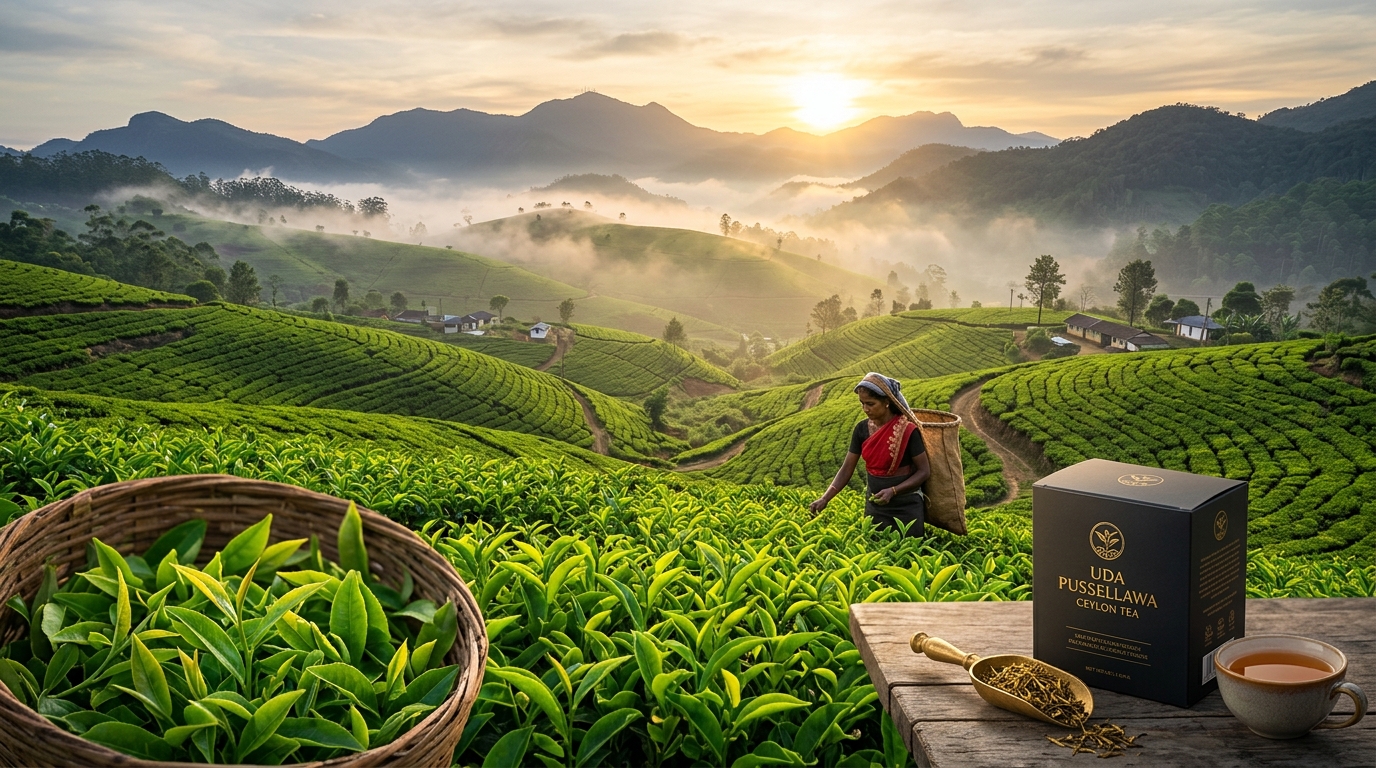
Uda Pussellawa Ceylon Tea: The Hidden Mountain Valley with a Delicate Pink Cup
Tucked away in the quiet, rugged folds of Sri Lanka’s central massif lies a region that remains one of the island’s best-kept secrets. Between the bustling tea hub of Kandy and the cool, colonial charm of Nuwara Eliya, the Uda Pussellawa valley sits in a secluded pocket of the central highlands. It is a place of dramatic mountain ridges and deep, sheltered valleys where the air feels thin, crisp, and perpetually cool.
This region is defined by its unique relationship with the weather. While other parts of the island face the full brunt of the monsoon winds, Uda Pussellawa finds itself cradled by the surrounding terrain. This protection, combined with a high elevation that stretches toward the clouds, creates the perfect conditions for a tea that is prized for its refinement. The signature of this valley is a liquor that often displays a soft, delicate pink hue—a visual hallmark that distinguishes it from the bolder, darker infusions of the lowlands.
Geographic Geography, Topography & Elevation
Uda Pussellawa is a landscape of verticality. The tea estates here are carved into steep, mist-covered slopes that climb from 4,000 feet to well over 5,000 feet above sea level. The topography is characterized by narrow, wind-swept ridges and deep, shadowed valleys that act as natural reservoirs for the cool mountain air.
Because of its position on the eastern side of the central mountain spine, the region experiences a distinct micro-topography. The mountains act as a barrier, forcing the air to rise and cool rapidly as it moves across the ridges. This rapid cooling process is essential for the tea plants. It slows down the metabolic rate of the bushes, forcing them to grow more slowly and concentrate their energy into the young, tender shoots. This slow growth is the fundamental secret behind the quality of high-grown Ceylon black tea.
Seasonal Monsoons, Rain Shadow & Sun Exposure
The climate in Uda Pussellawa is a study in contrasts. Unlike the northern or southern regions that may rely on a single dominant weather pattern, this valley is influenced by two distinct monsoon cycles. The northeast monsoon and the southwest monsoon both sweep across the highlands, but the specific geography of the valley creates a "rain shadow" effect.
During the periods when the monsoons collide with the mountain walls, the valley is often blanketed in a thick, persistent mist. This mist serves as a natural filter for sunlight, protecting the delicate leaves from harsh, direct UV rays. As the monsoon clouds dissipate, the sky clears to reveal crisp, bright sunshine. This cycle of heavy moisture followed by intense, clean sunlight is the engine that drives the flavor profile of the region.
When the weather turns dry and cold—usually in the first quarter of the year—the tea bushes undergo a period of dormancy-like stress. This is when the "quality season" begins. The cold nights and bright days signal the plant to produce higher concentrations of essential oils and aromatic compounds, resulting in a cup that is not only beautiful in color but complex in character.
How Terroir Influences Quality Seasons
The journey from the mountain soil to your cup is a delicate process influenced by the environment:
- Weather Transition: Seasonal shifts reduce humidity and alter growth rates across the mountain ridge, forcing the plant to adapt.
- Cold Mountain Air: Chilly nighttime temperatures stress the plant gently, concentrating essential aromatic oils within the leaves.
- Peak Hand-Harvesting: Specialized plucking targets the young shoots at the exact peak of aromatic maturity to ensure quality.
- Micro-Batch Processing: Processing in local factories is adjusted to celebrate the unique seasonal character of each specific harvest.
Soil Composition & Mineral Signatures
The soil of Uda Pussellawa is as complex as its climate. It is predominantly composed of ancient, weathered rock, rich in iron and other minerals that have been broken down over millennia. These soils are acidic, well-draining, and contain a deep layer of organic mulch from the surrounding forest canopy.
As the rain washes over the slopes, it carries these minerals into the root systems of the tea bushes. This mineral signature is a key contributor to the "pink cup" phenomenon. The interaction between the soil's acidity and the chemical composition of the tea leaf during the oxidation process gives the liquor its characteristic rosy glow. It is a terroir-driven nuance that cannot be replicated elsewhere, making Uda Pussellawa a vital component of the Ceylon tea identity.
Iconic Growing Estates & Traditional Producers
The history of tea in this region is inextricably linked to the early pioneers who saw the potential in these steep, difficult-to-reach valleys. Many of the estates in Uda Pussellawa are heritage sites, maintaining traditional manufacturing processes that have been passed down through generations.
These estates often operate small, specialized factories that focus on the nuances of each harvest. Unlike the mass-production techniques used in some lower-altitude areas, the producers here prioritize the preservation of the leaf's integrity. They understand that the delicate character of the leaf can be easily lost if not handled with extreme care. Whether through precise withering or controlled oxidation, the producers in this valley are the silent guardians of a unique botanical science.
The Regional Sensory Profile: Cup Character & Tasting Notes
When you brew a cup of Uda Pussellawa tea, the first thing you will notice is the color. It is not the deep, dark mahogany of a low-grown tea, nor the pale, straw-gold of a very high-grown Nuwara Eliya. Instead, it is a vibrant, translucent pinkish-copper. It looks inviting, elegant, and refined.
On the nose, the tea offers a bouquet that is distinctly floral and slightly spicy. You might pick up notes of wild orchids, a hint of citrus zest, or even a subtle, earthy undertone that reminds you of the forest floor. On the palate, the tea is medium-bodied. It has enough strength to stand up to a splash of milk, but it is best enjoyed plain to appreciate the complexity. The astringency is bright and clean, leaving a lingering, refreshing finish that leaves the mouth feeling invigorated rather than dry.
Regional Terroir Comparison Table
| Sub-Region / Valley | Elevation Range | Peak Harvest Months | Color & Appearance | Signature Flavor Notes |
|---|---|---|---|---|
| Uda Pussellawa | 4,000–5,000 ft | Jan – March | Rosy, Pinkish-Copper | Floral, Spicy, Clean |
| Nuwara Eliya | 6,000+ ft | Jan – March | Pale Gold, Ethereal | Delicate, Citrusy, Crisp |
| Dimbula | 3,500–5,000 ft | Jan – March | Bright, Golden-Orange | Refreshing, Crisp, Lively |
| Uva | 3,000–5,000 ft | July – August | Deep, Coppery-Red | Exquisite, Pungent, Bold |
| Kandy | 2,000–4,000 ft | Feb – March | Intense, Dark Amber | Full-Bodied, Malty, Strong |
Frequently Asked Questions About Regional Terroir
What is the primary difference between Uda Pussellawa and Uva teas?
While both regions are influenced by the mountain geography, Uva is famous for its "seasonal" quality during the dry summer months, characterized by a bold, pungent flavor. Uda Pussellawa, by contrast, is more subtle, with a delicate, floral, and rosy character that is less aggressive on the palate.
Why is the color of the liquor so important in this region?
In the world of tea connoisseurs, the color is often a visual indicator of the oxidation level and the mineral content of the soil. The pinkish hue of Uda Pussellawa is a trademark of its high-grown, cool-climate terroir, signaling a tea that is refined rather than heavy.
Does the rain shadow effect impact the caffeine levels?
The rain shadow effect primarily influences the growth rate and the development of aromatic oils. While caffeine levels are naturally present in high-grown tea, the unique climate of this valley focuses more on the balance of flavor compounds, creating a smooth experience regardless of the caffeine content.
How do I store my Uda Pussellawa tea to keep it fresh?
Like all high-quality Ceylon black tea, store your leaves in an airtight, opaque container away from heat, moisture, and strong odors. Because this tea is delicate, keeping it fresh is vital to preserving those subtle floral notes.
Is this region suitable for other types of tea?
While the region is historically famous for its black tea, the manufacturing process can be adapted. Some estates have begun experimenting with small batches of Ceylon green tea or even white tea, which benefit from the same cool, mountain-grown environment.
Conclusion
Uda Pussellawa is a reminder that the world of tea is vast, nuanced, and deeply connected to the land. It is a region that rewards the curious drinker—those who look beyond the generic labels to find the specific character of a valley hidden in the clouds. Whether you are a long-time enthusiast or someone just beginning to explore the history of Ceylon tea, this region offers a sensory experience that is both elegant and unforgettable.
As you sip your next cup, take a moment to consider the steep, misty slopes, the dual monsoons, and the centuries of tradition that brought that delicate, rosy liquor into your home. The next step in your journey is simple: seek out a single-estate Uda Pussellawa and compare it to your favorite Dimbula or Nuwara Eliya to truly appreciate the diversity of the Sri Lankan highlands.