Understanding Ceylon Tea Elevations: A Simple B2B Guide for Global Buyers
When buying bulk tea from Sri Lanka, one word comes up constantly: elevation. Sri Lanka is a small island, but its mountain ranges create dramatically different tea growing zones. Understanding these zones helps tea importers, retailers, and distributors select the right blend for their customers.
Why Elevation Matters in Ceylon Tea
The height at which tea grows changes the air temperature, rainfall, and sunlight the tea bushes receive. Cold mountain air makes tea leaves grow slowly, creating light and delicate flavors. Warmer lowland weather makes leaves grow faster, creating strong, rich flavors.
Sri Lanka officially divides its tea country into three main elevation groups:
- High Grown Tea (Above 1,200 meters / 4,000 feet)
- Medium Grown Tea (600 to 1,200 meters / 2,000 to 4,000 feet)
- Low Grown Tea (Sea level to 600 meters / 0 to 2,000 feet)
1. High Grown Ceylon Tea: Light, Delicate, and Fragrant
Regions like Nuwara Eliya, Dimbula, and Uva produce High Grown Ceylon tea.
- Flavor Profile: Crisp, floral, citrusy, and bright.
- Color in Cup: Pale golden to light amber.
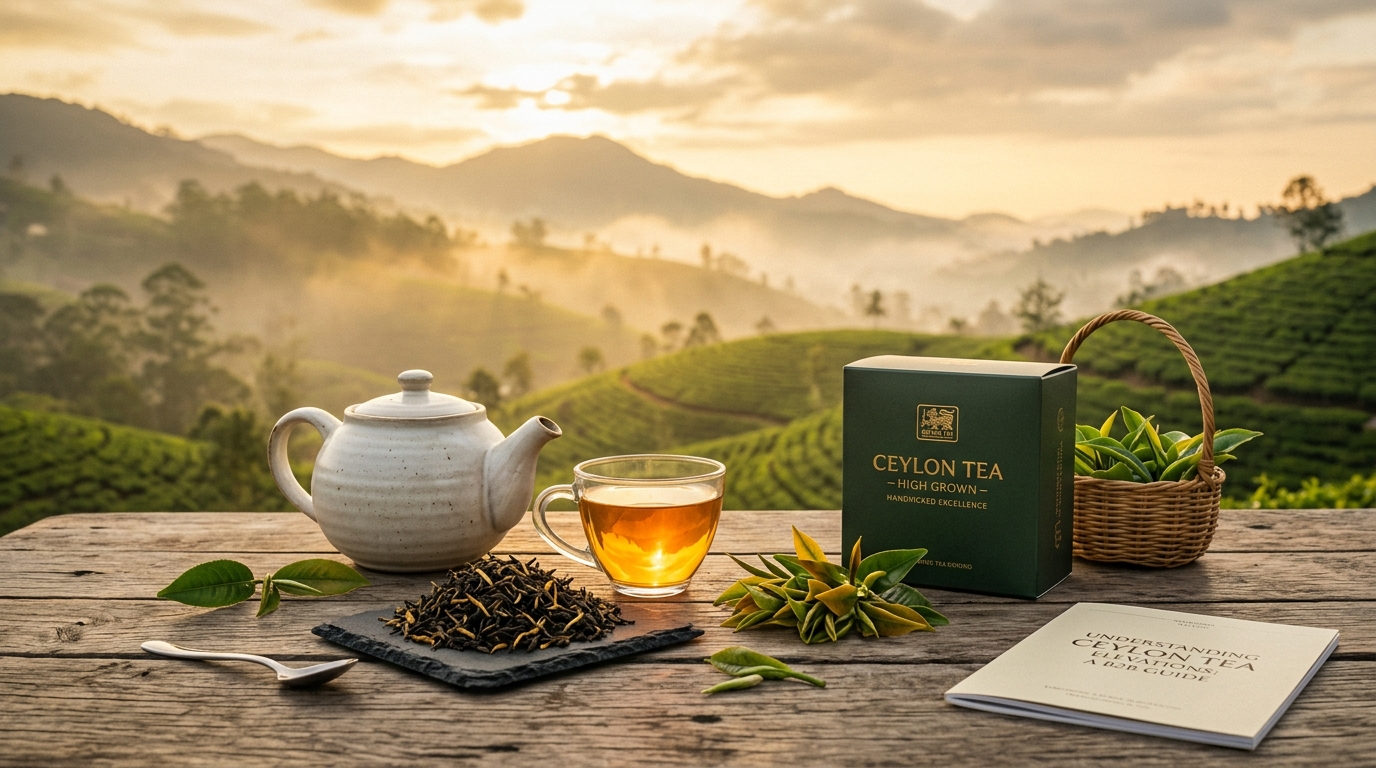
- Best For: Premium leaf teas, afternoon tea blends, and single-origin retail tins.
- Buyer Tip: Uva teas offer a unique honey-like flavor during peak harvest months (July to September), while Dimbula teas are famous for crisp citrus notes from January to March.
2. Medium Grown Ceylon Tea: Balanced and Versatile
Regions like Kandy produce Medium Grown Ceylon tea.
- Flavor Profile: Smooth, round, and rich without being too harsh.
- Color in Cup: Warm reddish-copper.
- Best For: Everyday tea bags, flavored fruit tea bases, and iced tea blends.
- Buyer Tip: Kandy teas create a strong base that holds up very well when blended with natural fruit oils like bergamot or lemon.
3. Low Grown Ceylon Tea: Bold, Strong, and Sweet
Regions like Ruhuna and Sabaragamuwa produce Low Grown Ceylon tea.
- Flavor Profile: Full-bodied, malty, with natural hints of caramel and honey.
- Color in Cup: Deep burgundy red.
- Best For: Milk tea blends, chai bases, and markets in the Middle East and Central Asia that prefer dark, strong tea.
- Buyer Tip: Low-grown teas produce dark, stylish long leaves (like OP1 and FBOP grades) that look very attractive in loose leaf packaging.
How to Guarantee Authentic Pure Ceylon Tea
To protect your supply chain from mixed-origin teas, always look for the official Ceylon Tea Lion Logo on export packaging. Issued by the Sri Lanka Tea Board, this logo guarantees:
- The package contains 100% Pure Ceylon Tea.
- The tea was packed in Sri Lanka.
- The product meets strict quality standards set by government inspectors.
Working directly with certified Sri Lankan exporters ensures you get fresh, authentic tea straight from the source.