
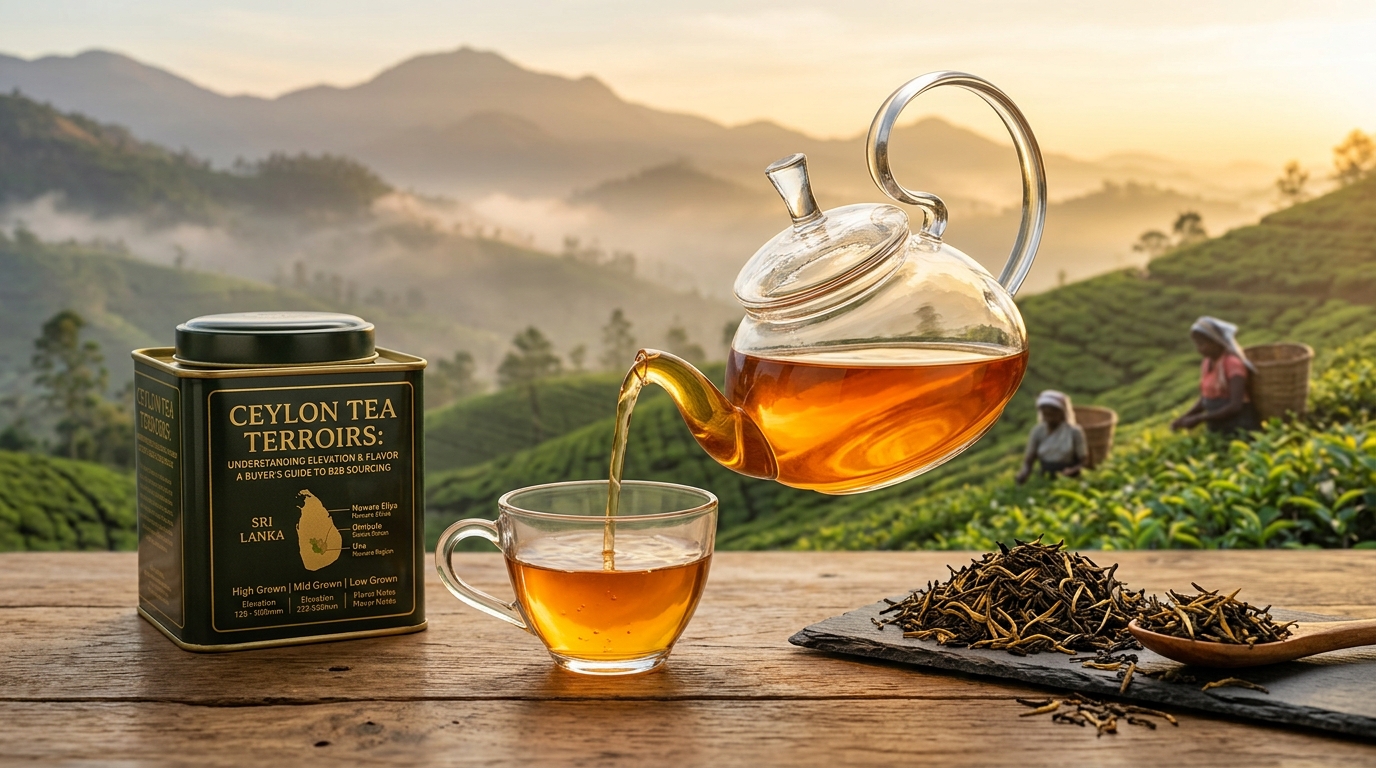
Understanding Ceylon Tea Terroirs: A Buyer's Guide to Elevation and Flavor
When buying bulk tea for your brand or retail business, understanding origin is key. Sri Lanka, historically known as Ceylon, produces some of the finest teas in the world. However, not all Ceylon tea tastes the same. The secret lies in altitude, rainfall, and regional microclimates—what tea experts call terroir.
In this guide, we break down Sri Lanka’s main tea growing regions in simple terms so you can select the perfect Ceylon tea grade for your product line.
Why Elevation Matters in Tea Sourcing
Tea bushes (Camellia sinensis) react strongly to their environment. In Sri Lanka, tea gardens are categorized into three main elevation levels:
- High-Grown Tea (Above 4,000 feet / 1,200 meters)
- Medium-Grown Tea (2,000 to 4,000 feet / 600 to 1,200 meters)
- Low-Grown Tea (Sea level to 2,000 feet / 0 to 600 meters)
Higher altitudes mean cooler weather and slower plant growth. This creates delicate, aromatic teas with light-colored liquor. Lower altitudes mean warm, humid weather, producing dark, full-bodied, and robust teas.
The Key Tea Growing Regions of Sri Lanka
1. Nuwara Eliya (High Grown)
Known as the 'Champagne of Ceylon teas,' Nuwara Eliya sits at the highest peak. The air is cool and crisp. Teas from this region produce a golden cup with a soft, floral scent and a clean, subtle taste.
- Best For: Premium specialty tea bags, luxury loose-leaf blends, and light afternoon tea lines.
2. Dimbula (High Grown)
Dimbula teas are grown on western mountain slopes. Monsoon winds give these teas a rich, reddish-amber color and a bright, well-balanced flavor.
- Best For: Classic English Breakfast blends and high-end iced tea products.
3. Uva (High/Medium Grown)
Located on the eastern slopes, Uva tea experiences dry monsoon winds that give the leaves a very unique aroma and a slightly pungent, sweet flavor.
- Best For: Distinctive single-origin signature teas and flavored tea bases.
4. Ruhuna & Sabaragamuwa (Low Grown)
Located in the warm southern and western regions, these low-grown teas yield thick, dark leaves that brew strong, deep red-black liquid with natural caramel and sweet malt notes.
- Best For: Strong morning brews, traditional milk tea blends, and Middle Eastern tea markets.
How to Ensure Authenticity: Look for the Lion Logo
To ensure you are purchasing authentic Pure Ceylon Tea packed in Sri Lanka, always check for the official Lion Logo administered by the Sri Lanka Tea Board. This certification guarantees that the product contains 100% pure Ceylon tea without low-quality blends from other countries.
By sourcing direct single-origin Ceylon teas based on regional terroir, your business can deliver consistent quality and distinct flavor profiles that keep tea drinkers returning.