
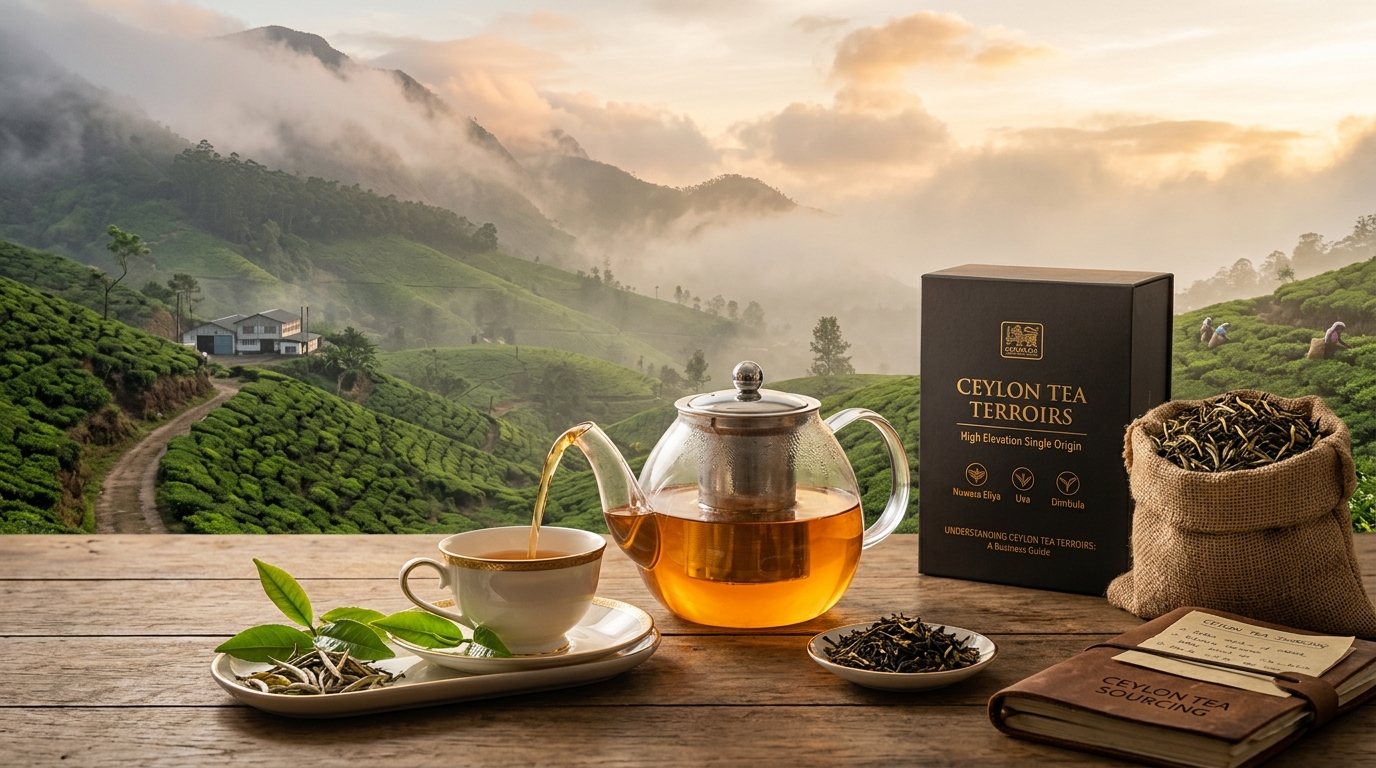
Understanding Ceylon Tea Terroirs: A Business Guide to Elevation and Flavor Profiles
Sri Lanka is world-famous for producing Pure Ceylon Tea. But did you know that tea from Sri Lanka tastes completely different depending on where and how high up it is grown?
For international buyers, importers, and tea shop owners, understanding Ceylon tea terroirs (growing regions) is the secret to buying the right tea for your customers.
Why Elevation Matters in Ceylon Tea
Sri Lanka's tea growing areas are grouped into three main elevations:
- High-Grown (Above 4,000 feet / 1,200 meters)
- Medium-Grown (2,000 to 4,000 feet / 600 to 1,200 meters)
- Low-Grown (Sea level to 2,000 feet / 0 to 600 meters)
The higher the tea grows, the cooler the air and the slower the tea bushes grow. Slower growth gives the leaves more time to develop delicate, floral aromas and light golden colors.
The Key Ceylon Tea Regions
1. Nuwara Eliya (High-Grown)
- Flavor Profile: Delicate, floral, light, and crisp.
- Color in Cup: Pale golden color.
- Best For: Luxury specialty tea lines, premium single-origin offerings, afternoon tea blends.
2. Dimbula (High-Grown)
- Flavor Profile: Fresh, oaky, and well-balanced with a pleasant brightness.
- Color in Cup: Reddish-amber.
- Best For: Classic English Breakfast blends and everyday high-end black tea.
3. Ruhuna & Sabaragamuwa (Low-Grown)
- Flavor Profile: Bold, rich, sweet, with hints of caramel and honey.
- Color in Cup: Deep burgundy and dark red.
- Best For: Middle Eastern markets, strong morning teas, and milk tea blends.
How to Verify Authentic Pure Ceylon Tea
When buying bulk tea from Sri Lanka, always look for the official Ceylon Tea Lion Logo.
This mark guarantees:
- The tea is 100% Pure Ceylon Tea grown in Sri Lanka.
- The tea was packed in Sri Lanka to preserve fresh quality.
- The product meets strict quality standards set by the Sri Lanka Tea Board.
Conclusion for Wholesale Importers
Matching the right elevation to your customer preference is key to building a successful tea brand. Whether you need a bright, high-grown Nuwara Eliya tea or a thick, strong Ruhuna leaf, Sri Lanka offers a tea profile for every market.